

What “28 dB Noise Reduction” Means: How to Read Lab Results & Certificates
You’ve seen it on the box: “28 dB Noise Reduction!” It sounds impressive, but what does it actually mean? Is 28 dB good? Is 32 dB life-changingly quiet? If you’ve ever felt confused while trying to buy headphones or even new windows, you’re not alone.
This guide acts as your translator. We’ll break down exactly what “28 dB noise reduction” means by decoding the quirky decibel scale—a crucial step for effective home soundproofing or just getting some quiet. We’ll turn the technical jargon into practical knowledge you can use immediately.
Most importantly, you’ll learn the vital difference between a perfect lab rating and the performance you’ll get in the real world. To see how these ratings translate into actual readings, learn how to measure pickleball noise correctly using a dB meter. In practice, the numbers don’t tell the whole story, but knowing their secret will help you confidently choose the right product for the peace you need.
What Is a Decibel (dB)? Your Guide to Sound’s “Thermometer”
Think of the decibel (dB) as a degree on a thermometer, but for sound. It’s simply a unit used to measure and compare how loud something is. A higher number means a louder sound, just like a higher temperature means it’s hotter outside. This simple measurement is the key to understanding any noise reduction rating you see on a product.
To put the decibel scale into perspective, here’s where some everyday noises land. Keep in mind that prolonged exposure to any sound over 85 dB can lead to hearing damage.
- Whisper: ~30 dB
- Normal Conversation: ~60 dB
- City Traffic: ~85 dB
- Lawnmower: ~90 dB
- Rock Concert: ~110 dB

How 28 dB Noise Reduction Works: The Simple Math You Actually Need
When you see a rating like “28 dB,” think of it as a simple discount on sound. That number represents how many decibels the product is designed to subtract from your environment. This is the core of most soundproofing techniques—the rating tells you just how much noise that barrier can block, giving you a straightforward way to understand its power.
If that 90 dB lawnmower is roaring outside, a window rated for 28 dB noise reduction aims to lower the sound to just 62 dB inside your home (90 – 28 = 62). Suddenly, that disruptive racket becomes as quiet as a normal conversation. But is that drop from a roar to a chat actually a good result?
So, Is a 28 dB Noise Reduction Rating Good?
The short answer is yes. A 28 dB reduction is a solid, effective rating that will create a noticeable difference in most noisy environments. It’s a strong B+ or A- grade. To make sense of any number you see on a package, it helps to sort it into a simple tier system. Think of it as a quick reference guide for quiet.
Here’s a handy rule of thumb for judging noise reduction ratings, whether you’re comparing a 25 dB window to a 30 dB one or wondering what a good NRR for earplugs is:
- OKAY (15-20 dB): Takes the edge off sharp sounds.
- GOOD (21-28 dB): Creates a genuine zone of quiet.
- EXCELLENT (29+ dB): Very effective; provides significant silence.
The Catch: Why Lab Ratings Aren’t What You’ll Experience
Now for the fine print. That impressive number on the box is a lab score, a bit like a car’s “miles per gallon” rating—achieved under perfect conditions you’ll never quite match on your daily commute. This official score is called the Noise Reduction Rating (NRR), and it represents the absolute best-case scenario, measured by a trained professional in a soundproof room. For more detail on how these ratings affect legal limits and testing procedures, review our Pickleball Noise Measurement & Compliance Guide.
The biggest reason for this lab-vs-reality gap is an imperfect fit. In the real world, a tiny opening around an earplug or headphone cushion lets sound leak in, undermining the product’s effectiveness. Lab tests don’t account for wearing glasses, having long hair, or simply not inserting an earplug perfectly every single time, all of which compromise the seal.
So, how can you estimate the real-world noise reduction performance? For hearing protectors like earplugs, safety organizations recommend a simple formula: take the NRR, subtract 7, and then divide by 2. An earplug with a 29 dB NRR would therefore offer a more realistic 11 dB of protection in practice. It’s a conservative estimate, but it’s a far more useful number for managing your expectations.
Why a 3 dB Difference Is a Bigger Deal Than You Think
This is where interpreting hearing protection ratings can feel a little counterintuitive. When comparing products, the difference between 28 dB and 31 dB of noise reduction seems minor. Why pay more for just a few extra points? The answer lies in the quirky, non-linear nature of the decibel scale for sound. It’s not like a normal ruler where every inch is the same length.
Every 3 dB of improvement doubles a product’s sound-blocking power. That jump from a 28 dB to a 31 dB product isn’t a small upgrade; it means the product is working nearly twice as hard to stop sound energy from reaching your ears.
While 3 dB is a huge leap in power, our ears have their own rule of thumb: it takes a full 10 dB reduction for us to perceive a noise as being “half as loud.” That small number on the package suddenly carries a lot more weight, as each point represents a significant step toward making your world feel dramatically quieter.
How to Read a 28 dB Noise Reduction Certificate (NRR & STC)
So where do you find this powerful number? For hearing protection like earplugs or earmuffs, look for the Noise Reduction Rating (NRR), typically printed right on the packaging. When you see a code like ANSI S3.19 nearby, that’s the official testing standard—a seal of approval confirming the number is legitimate and not just a marketing claim. It means the product was tested in a controlled lab to earn its score.
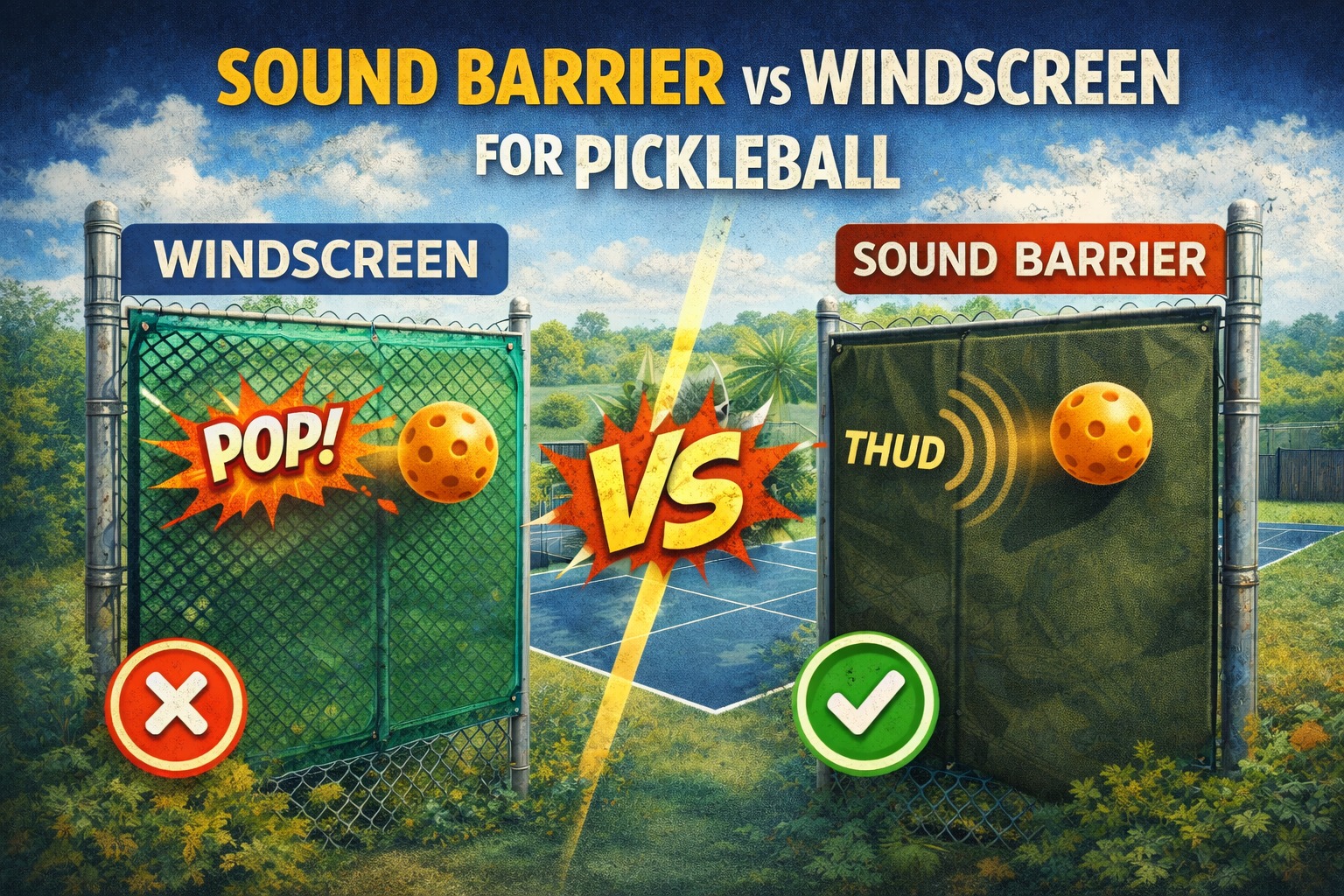
But what about blocking noise through a window or wall? Here, you’ll look for the Sound Transmission Class (STC) rating. Think of STC as NRR’s cousin: it also measures decibel reduction, but it’s the standard for building materials. Understanding STC is also critical when comparing a windscreen to a true pickleball sound barrier. A higher STC on soundproof window test results simply means more traffic and neighbor noise stays outside. For practical solutions beyond lab numbers, explore proven ways to reduce pickleball noise using barriers and smart court design.

Your 3-Step Checklist for Buying Peace and Quiet
You’re no longer guessing what “28 dB” means—you’re decoding it with the help of Sport Sonic Guard. Armed with this knowledge, you can cut through marketing hype and find genuine quiet. When you’re ready to make a choice, this simple soundproofing buying guide will give you confidence:
- Find the Official Rating: Look for the NRR or STC number.
- Estimate the Real-World Result: For earplugs, use the (NRR-7)/2 rule.
- Compare with Context: Remember, a 3 dB jump is a big upgrade!
You’re now equipped to move beyond the numbers and choose the right product for the peace you need. Because Pickleball Noise actually triggers complaints.
Leave a Reply