
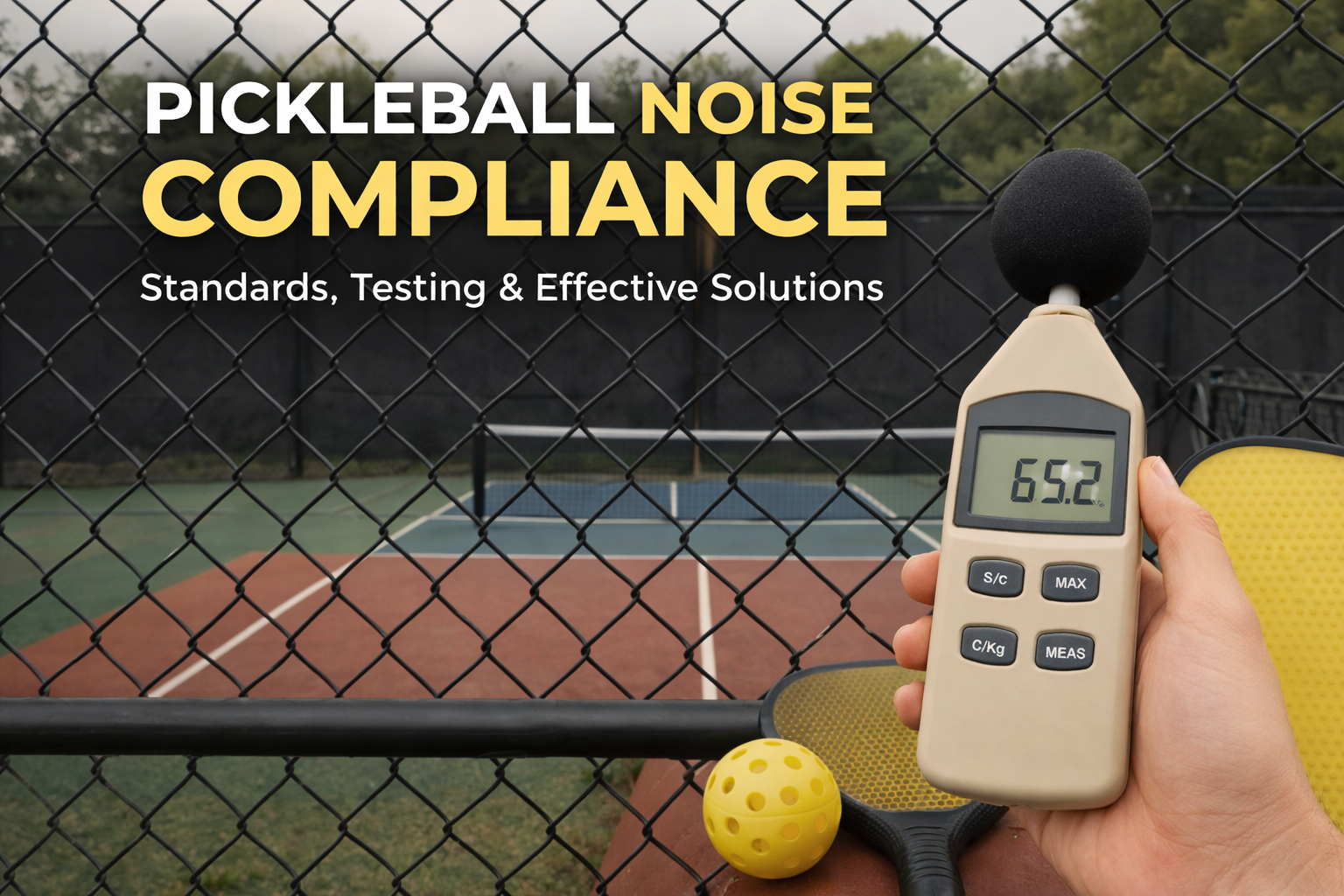
Pickleball Noise Measurement & Compliance Guide
It’s a sound you know instantly: a sharp, high-pitched pop that cuts through the background noise of a quiet afternoon. For players, it’s the rhythm of the game, but for many nearby, it’s a source of constant frustration. Pickleball noise compliance has become a growing concern for communities trying to balance the game’s popularity with neighborhood peace.
To understand what’s happening, think of the difference between a dull thwump from a tennis ball and a sharp crack. That piercing crack is what our ears find so hard to ignore, and it answers the core question of why pickleball is so loud. This unique sound comes directly from the equipment itself.
To understand why the sound is so disruptive in the first place, it helps to first look at the science behind pickleball noise, which we break down in our Ultimate Guide to Pickleball Noise Abatement.
Unlike the soft strings and fuzzy ball of tennis, pickleball uses a hard composite paddle to strike a rigid, perforated plastic ball. Sound experts confirm this combination produces a high-frequency tone that travels farther than expected. This simple physics points toward effective solutions, from what makes a pickleball paddle quiet to meeting USA Pickleball noise standards.
How Loud is ‘Too Loud’? A Simple Guide to Decibels and Noise Rules
Sound experts measure noise using units called decibels (dB). While a quiet library is about 40 dB and a normal conversation is 60 dB, the sharp pop of a pickleball can register 70 dB or more right beside the court. This isn’t just loud; its high-pitched nature is what makes it so distinct from background noise.
This is where local rules enter the picture. Most cities and even many HOA rules for pickleball noise set a specific daytime limit, often around 55-60 dB. Achieving pickleball noise compliance means the sound must fall below this number by the time it reaches a neighboring home. You can usually find your town’s noise ordinance by searching online for “[Your Town Name] noise ordinance.”
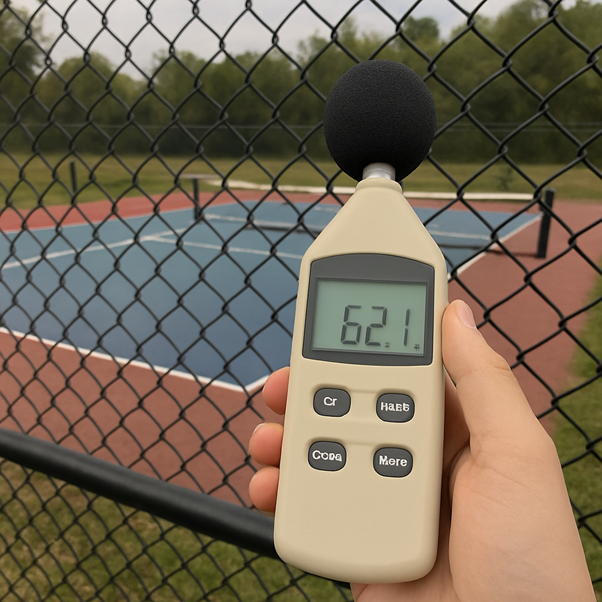
Crucially, officials measure pickleball noise compliance at the nearest residential property line, not on the court.
This single detail is the most important factor when measuring pickleball court decibel levels officially. Distance and sound-absorbing fences help, but that final reading is the ultimate test—and it’s why something as simple as a quieter paddle can make all the difference.
What Players Can Do to Meet Pickleball Noise Compliance: Quiet Paddles and Balls
Fortunately, one of the most effective solutions to pickleball noise rests directly in the hands of the players. The sharp “pop” of the game is largely created by a hard paddle striking a hard ball. To combat this, manufacturers now offer a range of “quiet” or “sound-dampening” paddles. Unlike standard paddles that act like a small, stiff drumhead, the best sound deadening pickleball paddles use advanced core materials that absorb the ball’s impact, reducing both the volume and the high-pitched frequency of the sound.
Equipment changes play a major role in reducing sound at the source. For a deeper look at how paddles, balls, and materials affect noise levels, see our complete breakdown of pickleball noise abatement solutions.
The paddle is only half of the equation; the ball plays a crucial role, too. In response to community feedback, USA Pickleball has created a “Quiet Category” for equipment, which includes low noise pickleball balls. Manufacturers typically make these balls from a slightly softer plastic, which further muffles the sound at the point of contact. This changes the distinct sound from a sharp crack to a much duller, lower-frequency thud that doesn’t travel as far.
When combined, these equipment changes can make a remarkable difference. Switching from a standard paddle and ball to quiet pickleball paddles vs standard versions can reduce the sound level by up to 10 decibels. To the human ear, this is perceived as cutting the noise in half—a significant step toward community-wide compliance and a more peaceful environment for everyone.
How to Soundproof a Pickleball Court for Noise Compliance
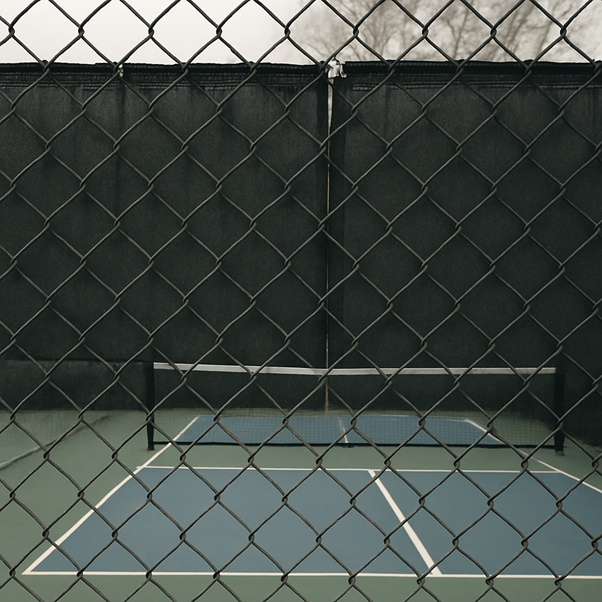
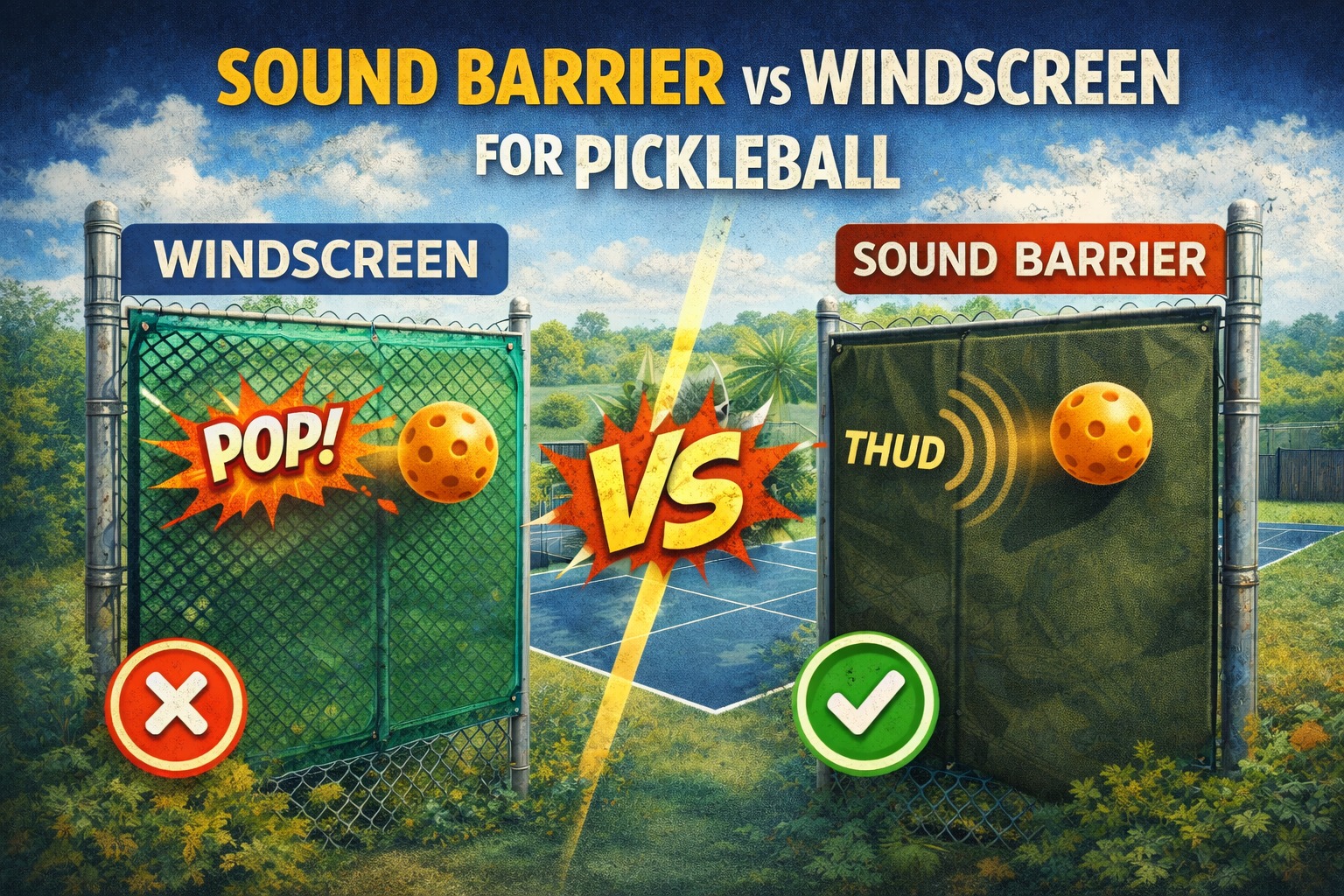
While quiet equipment helps, the most effective sound reduction for pickleball courts involves changing the environment itself. A common mistake is assuming a simple fence just blocks the view; sound can easily pass through or bounce off hard surfaces. The real goal is to absorb the noise. This is where specialized acoustic fences for pickleball come in, which are designed to trap sound waves instead of reflecting them back into the neighborhood.
The most common soundproof pickleball court options involve adding heavy, dense acoustic blankets directly to existing chain-link fences. Think of it like hanging a thick quilt on a wall to muffle a noisy room. These engineered barriers capture the sharp “pop” of the ball, often cutting the perceived noise in half for nearby homes. This reduction is frequently enough to bring courts into compliance with local sound rules.
For an even greater effect, communities can combine these engineered solutions with nature. Planting dense hedges, shrubs, or a line of evergreen trees around the courts adds another layer of sound spread. The leaves and branches help to break up and scatter any sound waves that might get past the primary barriers. While not a standalone fix, this natural buffer is an attractive and effective partner to acoustic fencing, creating a more peaceful setting for everyone.
Beyond Fences: Using HOA Rules and Zoning for Lasting Peace
While sound barriers fix the physical space, lasting peace often comes from community agreements. Many HOA rules and city ordinances tackle pickleball noise complaints with simple, common-sense policies. Instead of just blocking sound, these rules manage it by setting clear expectations for players and residents, turning potential conflict into a predictable schedule. This approach focuses on how and when the game is played, providing clarity for everyone involved.
Some of the most effective solutions are surprisingly straightforward policy changes:
- Limit Hours of Play: A common compromise is to establish “quiet hours,” restricting play before 9:00 AM or after sunset.
- Mandate Approved Equipment: Communities can require that only approved, quiet-rated paddles and balls be used on courts.
- Plan for Buffer Zones: Through pickleball court location zoning, cities can require new courts to be built a minimum distance from homes, preventing future problems.
Finding the Middle Ground: A 3-Step Path for Players and Neighbors
While the constant pop of pickleball can sound like an unsolvable conflict, practical solutions exist. The path to neighbor-friendly pickleball involves focusing on three key areas: the equipment being used, the court environment, and the community rules in place.
The path to pickleball noise compliance is rarely a single fix. Lasting success comes from layering solutions—combining quieter paddles with sound barriers and fair hours of play. This cooperative approach is how communities effectively reduce pickleball court noise and find a sustainable balance.
This isn’t about silencing the sport; it’s about helping it grow responsibly. Pickleball’s future isn’t just about more courts, but better, quieter ones that strengthen a community instead of dividing it.
If you’re looking to go beyond compliance and build a long-term solution, our Ultimate Guide to Pickleball Noise Abatement outlines how communities combine equipment, barriers, and planning to reduce conflict and protect neighborhood peace.
For communities ready to move from discussion to action, Sport Sonic Guard products offer proven, court-level solutions designed to reduce pickleball noise and restore neighborhood peace.

Leave a Reply