
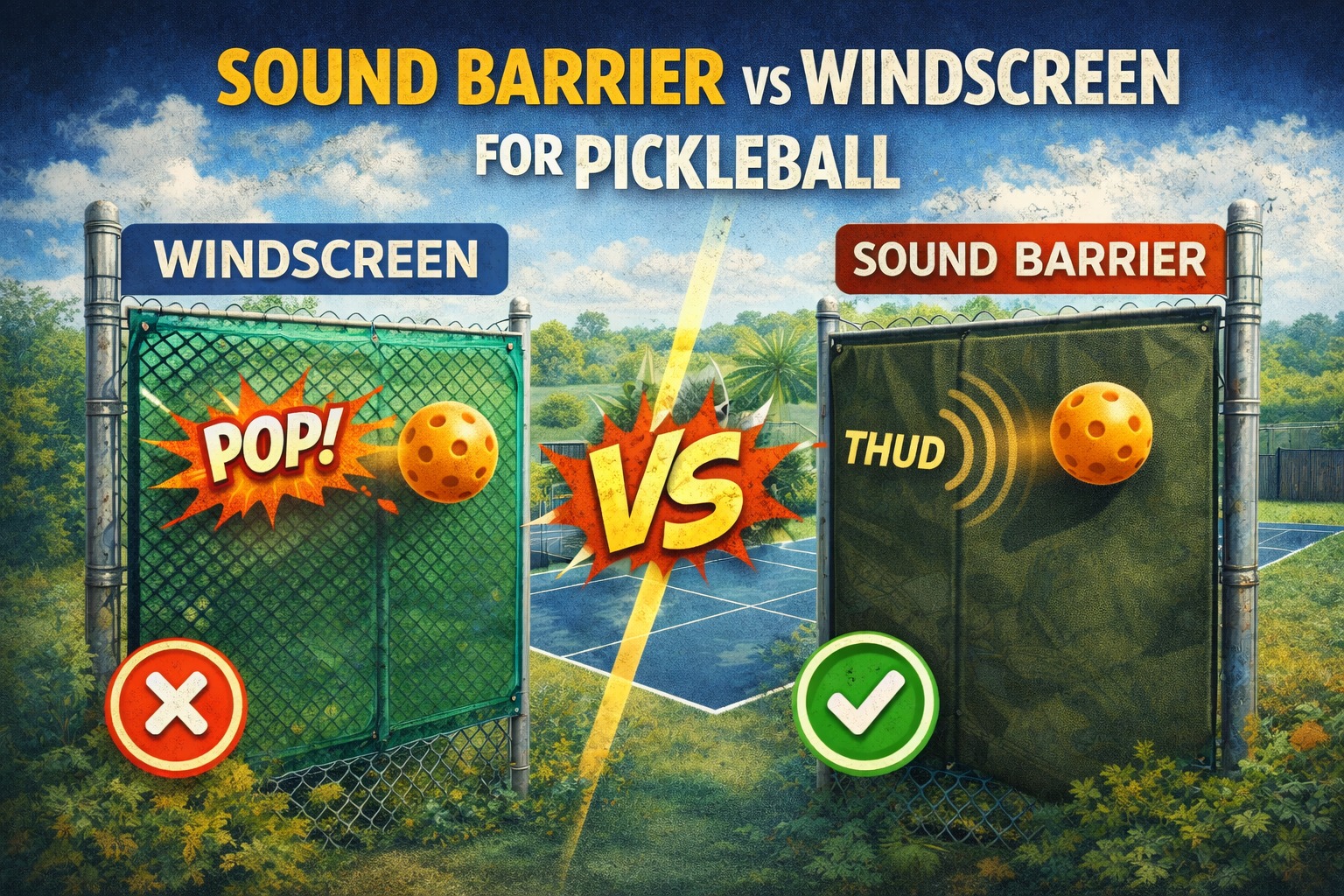
Sound Barrier vs Windscreen for Pickleball: What Actually Reduces Noise?
It’s the sound of summer for some and a relentless headache for others: the sharp POP, POP, POP of a pickleball game. As communities search for a real pickleball sound barrier, this unique noise continues to fuel a rise in pickleball noise complaints. For a deeper breakdown of why the sound is so disruptive, see our Ultimate Guide to Pickleball Noise Abatement.
In response, many towns and HOAs reach for what seems like an obvious fix: installing a standard windscreen on the court’s fence. After all, putting up a barrier should help block the noise, right?
The answer isn’t so simple. There’s a crucial difference between a windscreen and a true sound barrier, and choosing the wrong one is a costly mistake. Here’s a breakdown of what works, what doesn’t, and why, so you can find a real solution.
The “Brick Wall vs. Pillow” Rule: How a Pickleball Sound Barrier Actually Works
Stopping noise means stopping energy. Think of sound traveling in waves, like ripples in a pond. To quiet those waves, you only have two options, and this distinction is the key to solving any noise problem.
This is where the “brick wall vs. pillow” rule comes in. Imagine trying to stop a baseball thrown at a fence.
- Sound Blocking is the brick wall. Its sheer mass and density stop the ball cold and reflect its energy back. Heavy, solid materials block sound.
- Sound Absorption is the thick pillow. It’s soft, porous, and deep, so it soaks up the ball’s energy. Fluffy, porous materials absorb sound.
Any real solution for soundproofing an area must act like a great wall or a great pillow. Anything that is neither—not heavy and dense, and not thick and soft—is acoustically useless. So, which one is a windscreen?

Why a Windscreen is a Terrible Sound Blocker: The “Bedsheet” Problem
Applying the “brick wall vs. pillow” rule to the most common court accessory—the windscreen—reveals the issue. It’s obviously not a thick, soft pillow, so it can’t absorb sound. But is it a brick wall? Not even close.
If a real sound barrier is the brick wall, a windscreen is like trying to stop that baseball with a bedsheet. The mesh fabric is designed to let air pass through, and that open structure lets sound waves travel through just as easily. It has none of the heavy, solid mass required to stop and reflect the sharp pop of the ball. The sound energy sails right through it with almost no change in loudness.
So, do pickleball windscreens reduce sound? The simple answer is no. This is the crucial difference when comparing a windscreen vs. an acoustic panel for noise; one is for looks and wind, the other is for physics. While windscreens are great for privacy, they aren’t effective pickleball noise solutions. For that, you need something that was actually designed to be the “brick wall.”
What Is a True Pickleball Sound Barrier (And Why It Works)
If a windscreen is a useless bedsheet, the “brick wall” is a true pickleball sound barrier. These products are engineered with one job: stopping noise. Unlike windscreens, they are incredibly dense and heavy, built with enough solid mass to block and reflect the sharp sound waves before they can escape the court.
The secret to their effectiveness is a material called mass-loaded vinyl (MLV). Forget the complex name—just picture a heavy, flexible rubber mat. This is the core of specialized products like Acoustifence for pickleball noise. Its sheer weight is what does the work, forcing sound energy to bounce off and scatter instead of passing through the fence. Solutions like our outdoor acoustic sound barriers for pickleball courts use this same dense material to block sound effectively.
This material is designed to block noise, not absorb it. While not the best material for pickleball sound absorption (that’s a different tool for a different job), it is what is the best sound barrier for pickleball fences. The result is that the sharp “pop” becomes a duller, less intrusive “thud.” But how much of a difference does that actually make?
What a 10-Decibel Reduction Actually Sounds Like
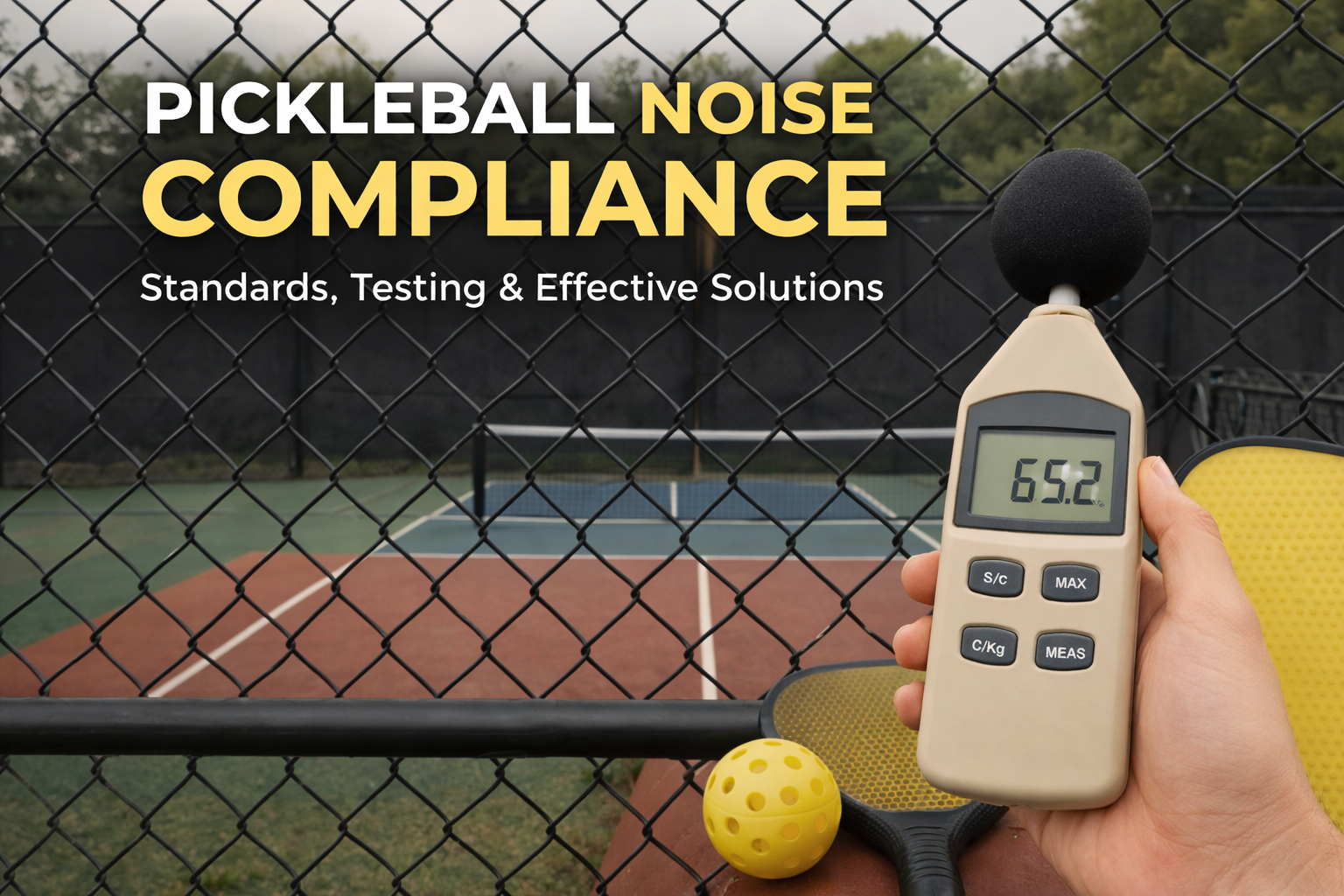
While the term “decibel” can feel abstract, the results are easy to understand. Acoustical experts have a simple rule of thumb: a 10-decibel (dB) reduction makes a sound seem about half as loud to the human ear. A quality sound barrier can achieve this level of reduction, which has a dramatic effect on the pickleball noise decibel level experienced by neighbors. This is the difference between a noise that grabs your attention and one that fades into the background. Communities evaluating compliance can review our Pickleball Noise Measurement & Compliance Guide for details on testing and local limits.
For pickleball, this reduction changes the entire character of the sound. The high-pitched, piercing “pop” that cuts through walls and windows is knocked down into a dull, low-frequency “thud.” The pickleball acoustic fence effectiveness isn’t about creating total silence; it’s about turning a disruptive noise into a manageable one that you can easily ignore. The goal is to make the court a better neighbor, not to build a soundproof vault.
Beyond Barriers: Other Ways to Quiet the Court
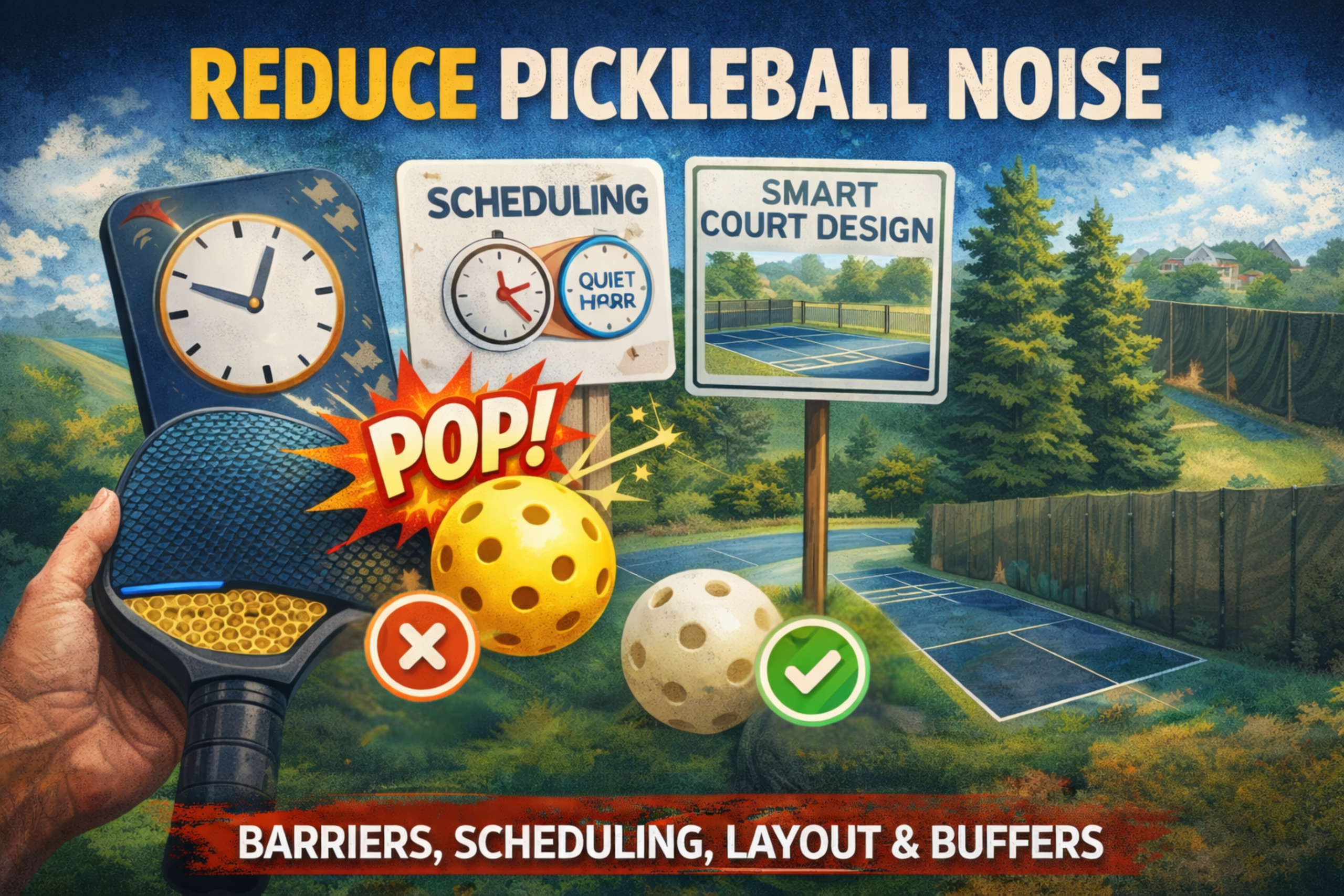
While a sound barrier is the single most effective tool, it doesn’t have to be the only one. Tackling the problem from multiple angles provides the best results and shows a commitment to finding comprehensive pickleball noise complaints solutions. The most direct method is to reduce the noise right at its source.
Fortunately, the industry has responded with new equipment. Consider these additions:
- “Quiet” Pickleball Paddles: Built with special core materials, these paddles change the sharp “pop” to a much softer, lower-toned sound.
- Softer Pickleballs: Some balls are designed specifically for lower noise, making an immediate difference without changing the game significantly.
Think of these solutions as a team. The sound barrier does the heavy lifting, while quiet pickleball paddles and balls lessen the amount of noise it has to block. Combining a barrier with quieter equipment offers the most dramatic improvement and is the surest path to making a court a good neighbor.
Your Action Plan: Choosing the Right Pickleball Sound Barrier
The definitive answer to pickleball noise is clear: windscreens are for wind and privacy, while true sound barriers are for noise. The simple physics is that only heavy, dense materials can effectively block sound waves. Understanding this difference protects your community from wasting money on ineffective fixes for pickleball noise complaints.
When evaluating solutions or discussing city ordinances on pickleball noise, use this 3-step guide to make the right call and estimate the true pickleball sound barrier cost:
- Identify Your True Goal: Are you blocking wind or fighting noise? Be honest.
- Apply the “Brick Wall” Test: If the solution isn’t heavy and dense, it won’t stop sound.
- Invest in the Right Tool: If noise is the problem, budget for a true sound barrier. For example, specialized pickleball acoustic fence panels are designed specifically for high-impact sports environments.
Contact Sport Sonic Guard for these customized solutions.
Leave a Reply