
The Ultimate Guide to Pickleball Noise Abatement
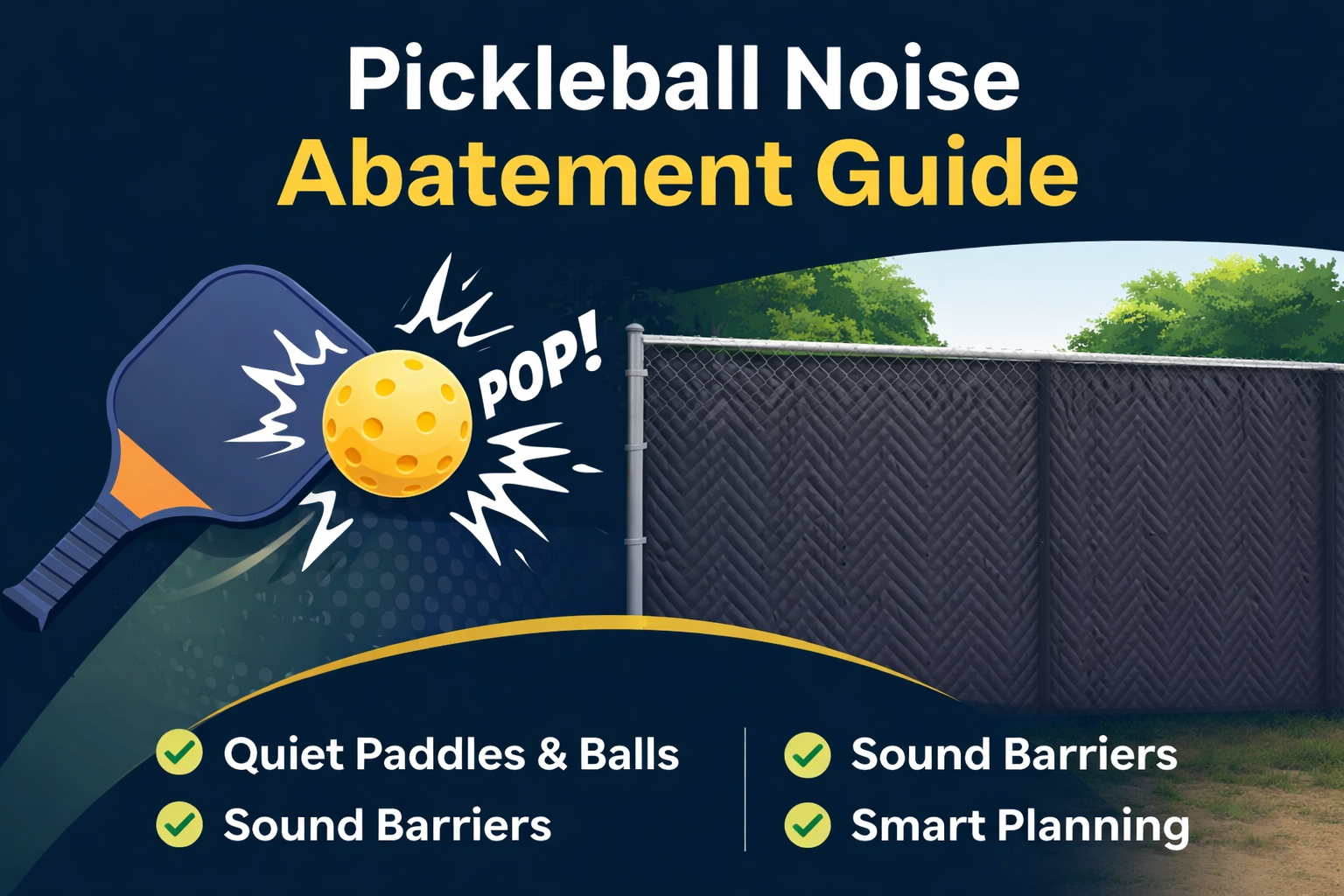
It’s a sound you can’t ignore: Pop. Pop. POP. While millions fall in love with pickleball, their neighbors are asking a simple question: why is it so loud? Pickleball noise abatement has become a growing concern, as the sound cuts through neighborhoods in a way tennis or basketball doesn’t, creating friction in communities across the country.
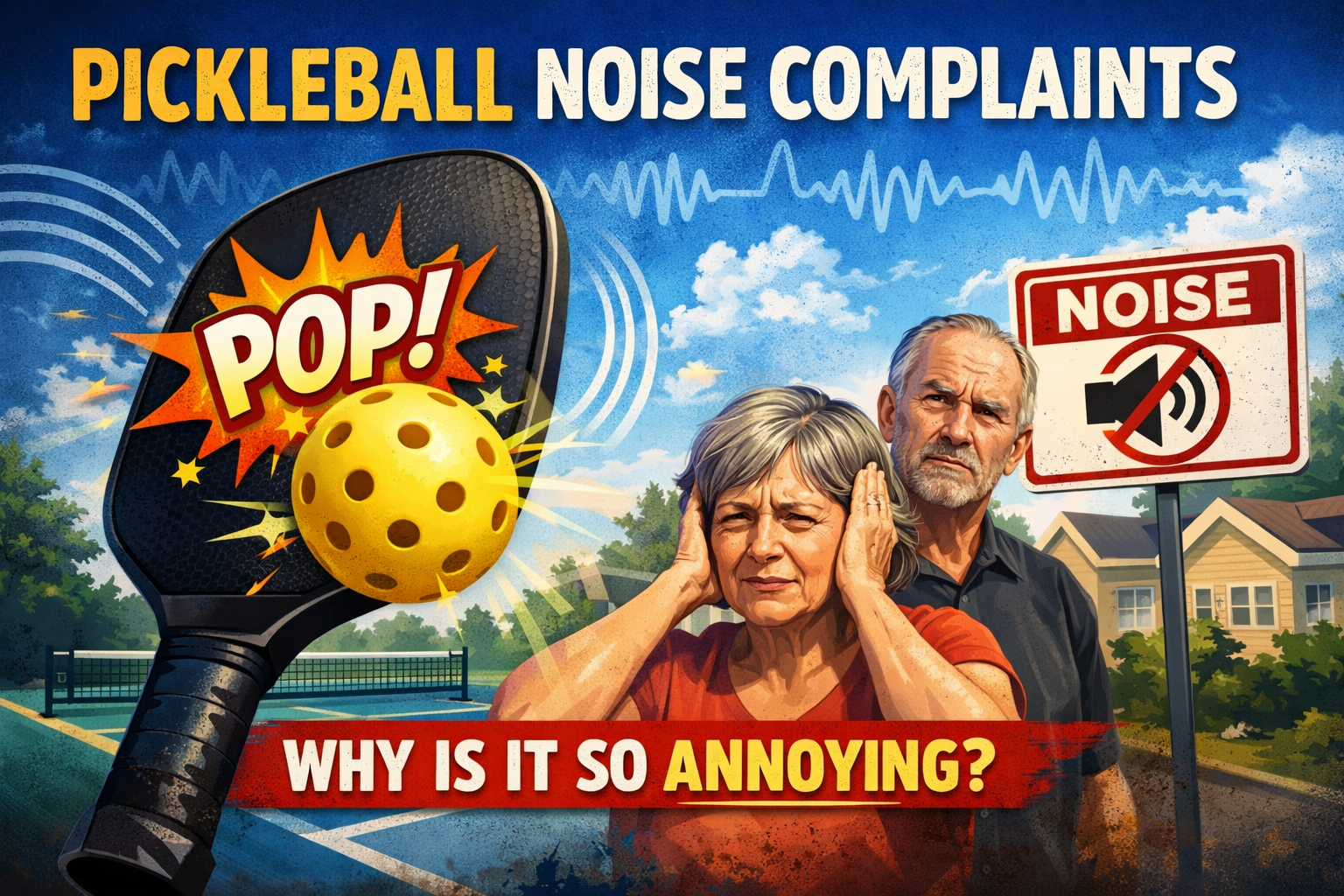
However, the issue isn’t just volume; it’s the specific type of sound. The sharp, high-pitched crack of the hard paddle hitting the plastic ball is a frequency our ears are hard-wired to notice, making it especially annoying. In simple terms, this is created by a straightforward recipe: a hard, perforated plastic ball striking a solid, rigid paddle. Unlike the soft, fuzzy ball and flexible strings of a tennis racquet, there’s very little give. This collision produces a crisp, high-frequency sound wave that our brains interpret as urgent or alarming.
That’s the key difference. A tennis ball makes a lower-pitched “thwack” that our ears perceive as less intrusive, while pickleball’s signature “pop” feels far more disruptive. Fortunately, proven solutions are available. Restoring peace involves using quieter equipment, modifying courts with sound-dampening materials, and implementing smarter community planning.
👉 Learn more about effective pickleball noise barriers on the Sport Sonic Guard products page.
How Loud is “Loud”? Putting Pickleball Noise on a Real-World Scale
To understand the noise issue, it helps to look at clear measurements. Sound level is measured in decibels (dB), which simply measure how loud a sound is. For context, a quiet library is around 30 dB, a normal conversation is about 60 dB, and a gas-powered lawnmower can hit 90 dB.
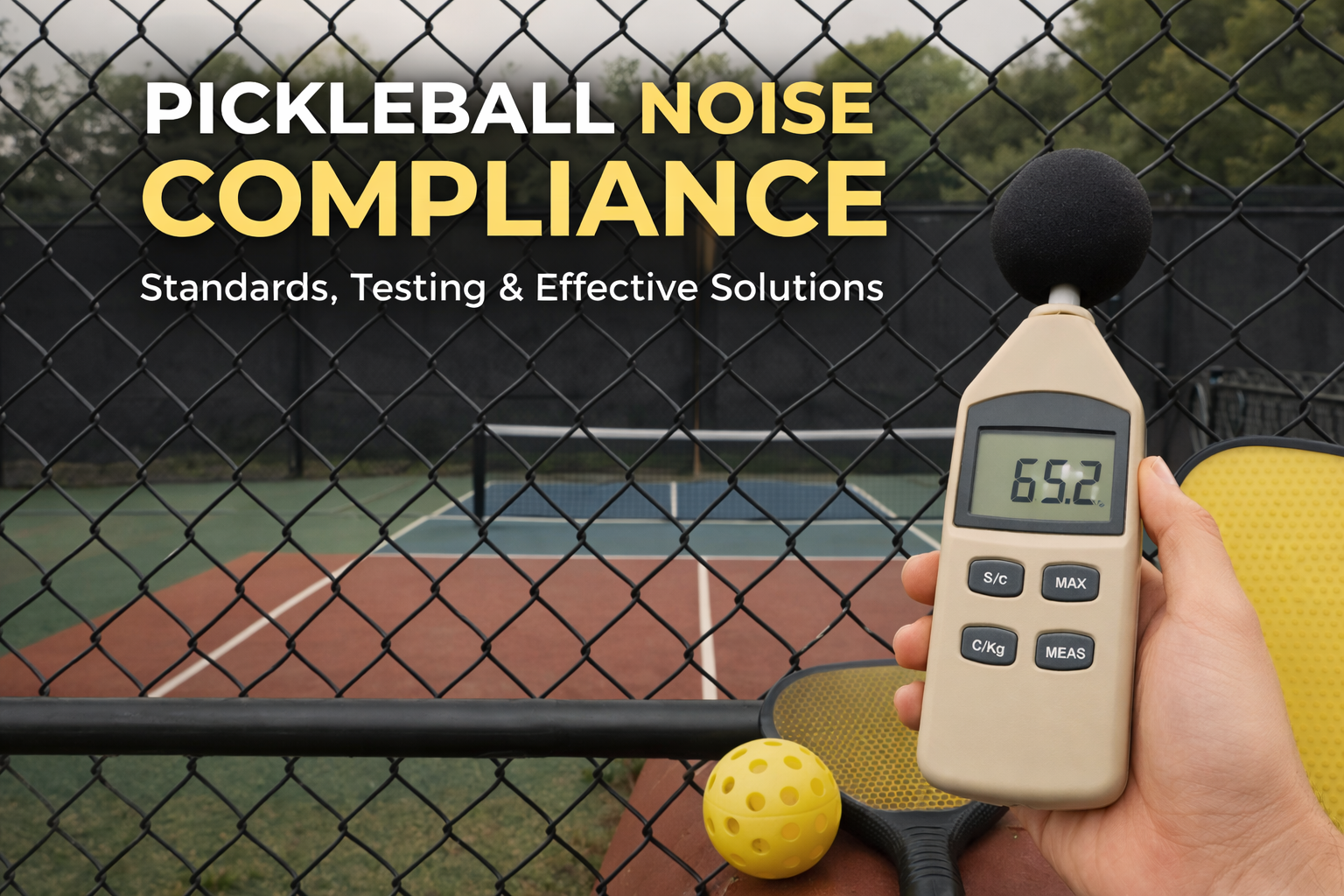
So where does the sport’s signature “pop” land? Independent and USA Pickleball-referenced noise studies show that a pickleball strike can measure around 70 decibels at a distance of 100 feet. That’s significantly louder than a normal conversation and falls into a range where many community noise ordinances begin to apply.
Distance is a powerful ally in reducing noise, as sound energy fades significantly as it travels. A general rule is that doubling the distance from the source can make the sound seem about half as loud. However, since moving courts is rarely an easy option, many are turning their attention to the source of the sound itself: the equipment.
The Simplest Fix: How “Quiet” Paddles and Balls Can Help
Since the paddle and ball create the noise, the most direct solution is changing the equipment. The principle is sound absorption. Think of clapping with thick winter gloves—the gloves absorb the impact and muffle the sound. Quiet pickleball equipment uses materials that soak up sound energy upon impact.
Two effective options are gaining popularity for noise reduction:
- Paddles with polymer honeycomb cores. These paddles have a soft, plastic honeycomb structure inside that act like a built-in shock absorber, deadening the high-pitched pop.
- Softer, foam-like pickleballs. Designed specifically for this purpose, these balls create a much lower-frequency sound when struck.
Is there a catch? For some, yes. This quieter gear can slightly change the ball’s bounce and speed, a trade-off that serious players often notice. For community play and practice, however, these products make a world of difference. When quieter equipment isn’t enough, the focus must shift to the court itself.
Beyond the Gear: Pickleball Noise Abatement at the Court Level
A standard chain-link fence does little for noise; sound waves pass right through its gaps like water through a fishing net. To effectively quiet a court, you need special materials that either absorb sound like a sponge or block it like a brick wall.
True sound blocking requires a dense, solid barrier—like a concrete wall or a special fence with no gaps—that physically blocks sound waves and creates a quieter “sound shadow” behind it. This is the principle behind effective sound-related barriers for outdoor courts.
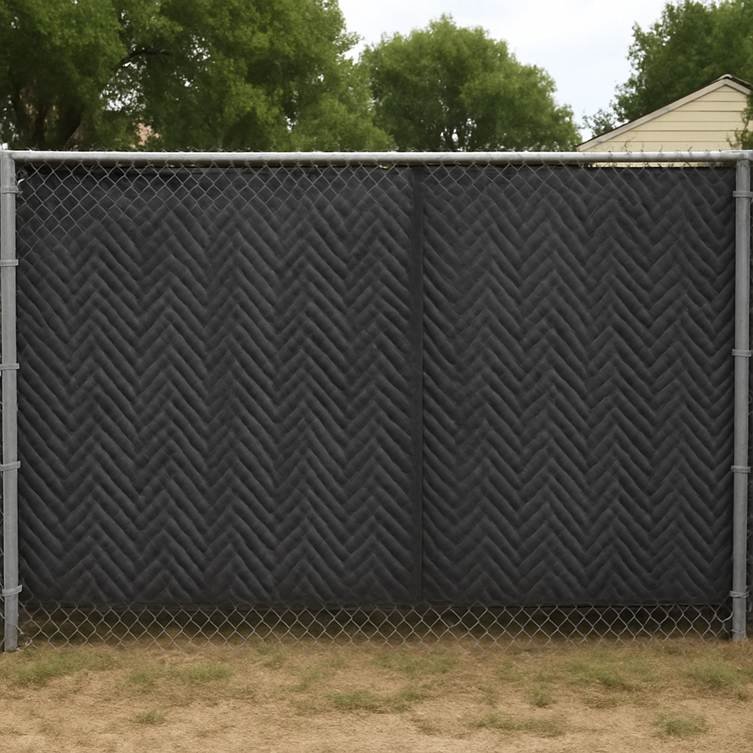
Since building a solid wall is often impractical, a popular solution involves upgrading an existing fence with sound-absorbing panels. These are typically heavy, quilt-like “acoustic blankets” that attach directly to the fence. They deliver a powerful one-two punch: their soft surface soaks up sound energy, while their density blocks much of the rest from passing through.
👉 See our Sports Shield Pro noise barrier panels designed for outdoor sound mitigation.
Smart Planning for Peace: Location, Landscaping, and Court Hours
Sometimes the most effective noise reduction has nothing to do with walls or fences. The single biggest factor in preventing noise issues is distance. Positioning new pickleball courts far from residential backyards is the simplest and most effective first step. When distance is used as a natural buffer, the sound often becomes a non-issue.
While many hope that a line of trees or shrubs can solve the problem, landscaping provides more of a psychological buffer than an sound-related one. Seeing a wall of green can make noise feel less intrusive, but thin vegetation does little to block the sharp pop. A truly effective natural sound barrier requires the density of a small forest, not just a decorative hedge.
This is where scheduling becomes a powerful tool. By establishing official hours of play, towns can protect neighborhood peace during sensitive times like early mornings and evenings. This simple administrative control costs nothing to implement and provides a clear, predictable compromise for both players and residents.
Finding the Quiet Compromise: A Layered Plan for Pickleball Harmony
You once just heard the pop, pop, pop of pickleball. Now, you understand the science behind the sound. You can see past the noise itself and recognize the distinct elements at play—from the paddle’s material to the court’s location.
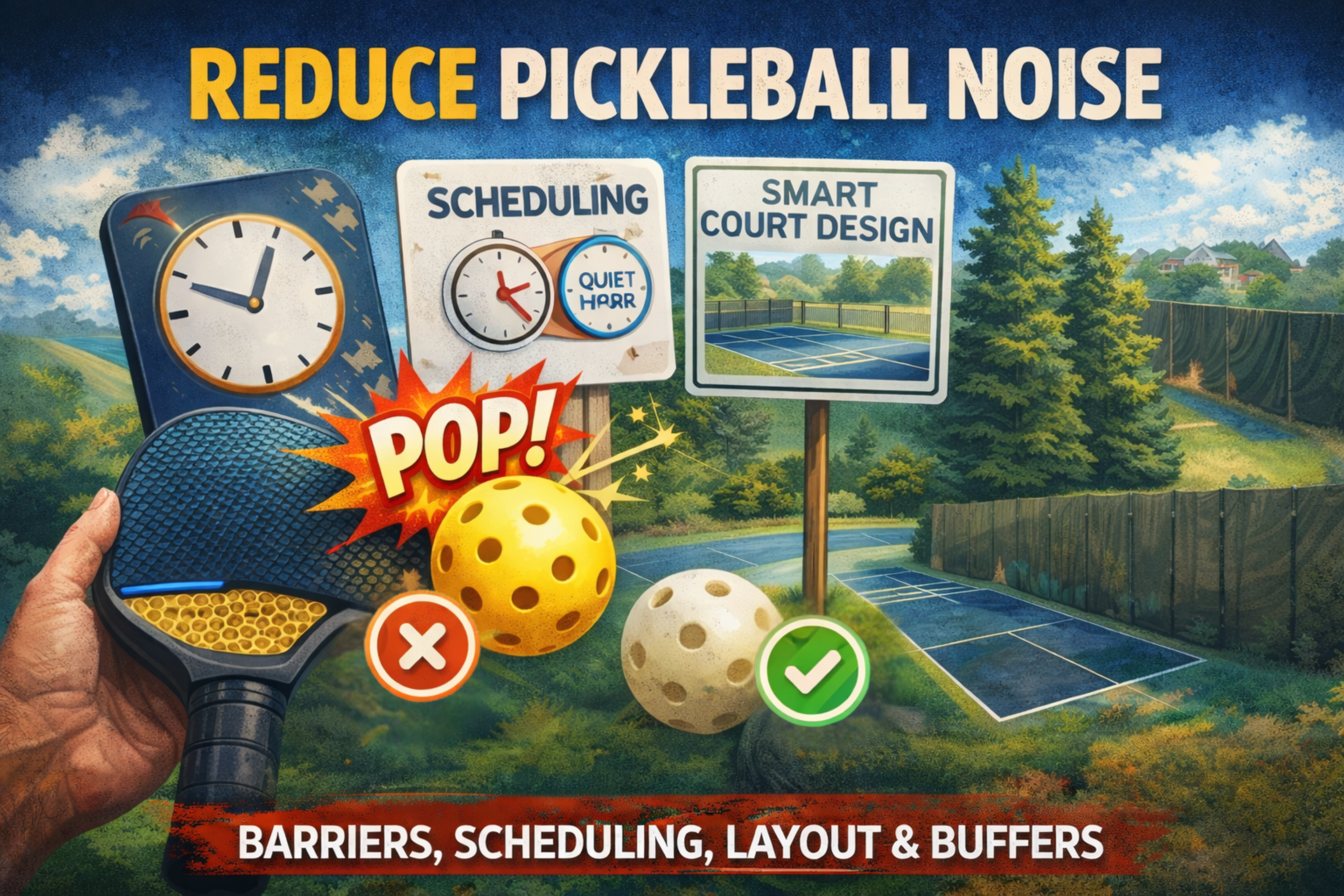
Effective pickleball noise abatement isn’t about one magic bullet. Real solutions come from layering approaches: combining quieter equipment with sound-dampening materials on courts and agreeing on sensible hours of play.
The debate over pickleball noise is no longer an unsolvable conflict, but a community puzzle. Armed with a clear understanding of the options, you are now ready to be a helpful voice in a more informed and constructive conversation.
👉 Discover Sport Sonic Guard’s noise abatement mission and history.
Leave a Reply