

HOA and Community Playbook for Pickleball Noise Mitigation
Is the constant pop, pop, pop of pickleball creating tension in your community? You are not alone. This playbook offers a clear strategy for pickleball noise mitigation, giving residents, players, and HOA boards practical solutions for every budget.
Ever wonder why pickleball court noise seems more jarring than a tennis match? It’s not just you. The sound is a sharp, high-frequency ‘pop’ that our ears are scientifically more sensitive to. Think of it like a sharp drum beat—it grabs your attention, while the softer ‘thwack’ of a tennis ball blends more easily into the background.
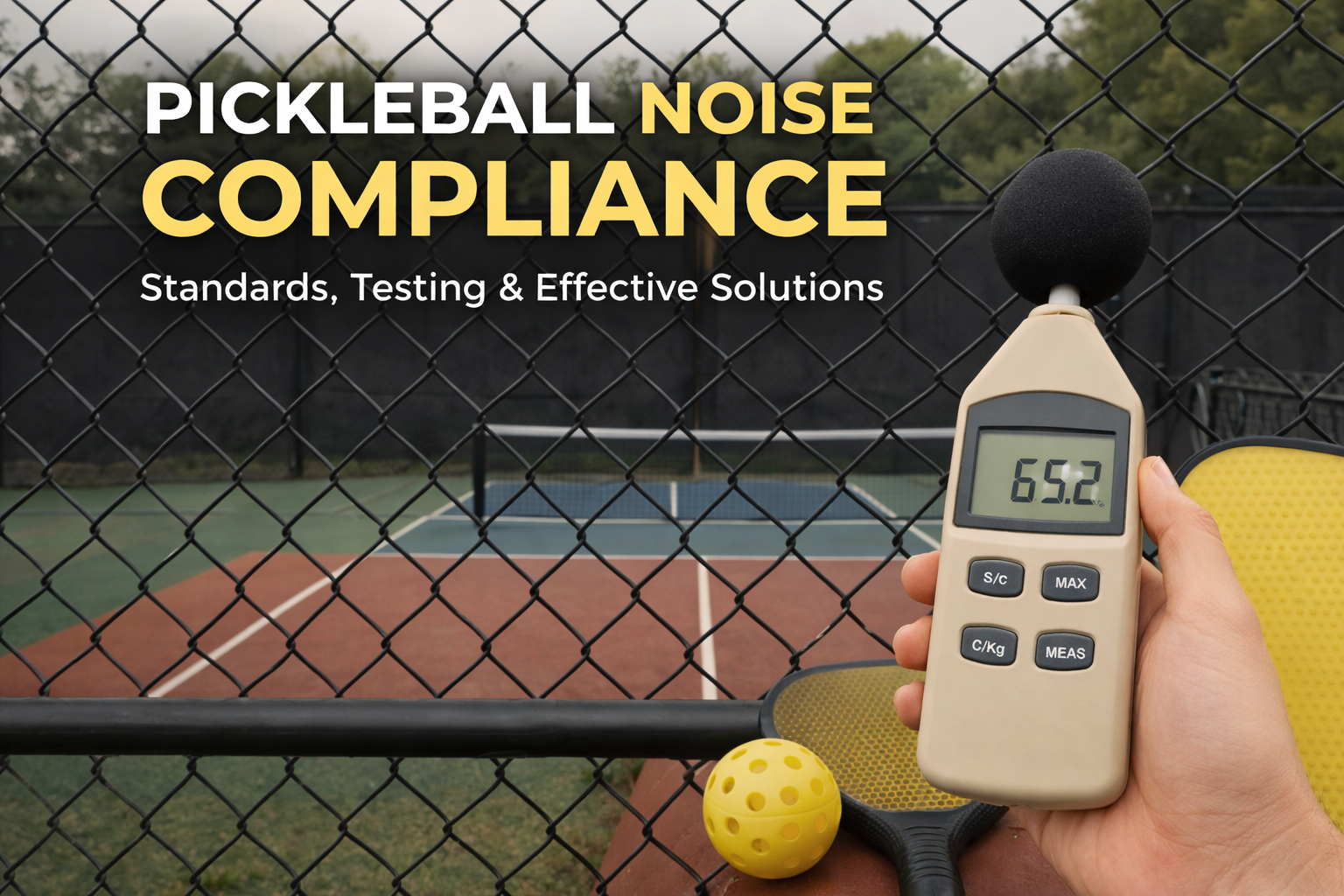
To understand acceptable pickleball decibel levels, we need context first. Sound is measured in decibels (dB); a quiet library is about 40 dB. Recent pickleball noise studies show the game can exceed 70 dB at 100 feet. That level often violates local noise ordinances. This data provides a clear baseline for finding a fair solution.
Tier 1: Immediate Pickleball Noise Mitigation with No-Cost Rule Changes
Before considering expensive fixes, your community’s most powerful tool is the calendar. Establishing clear pickleball court hours of operation is the fastest, no-cost way to provide immediate relief. For many communities, this is the first step in a layered pickleball noise mitigation plan. A balanced approach often looks like this:
- Sample ‘Quiet Hours’ Rule:
- No play before 9:00 AM on any day.
- Play ends at 8:00 PM or sunset, whichever comes first.
- On Sundays, play is restricted from 10:00 AM to 6:00 PM.
For communities with multiple courts, implementing a court rotation system can be a game-changer. The principle is simple: designate certain courts for play on specific days, giving homes nearest to the “resting” courts a break from the sound. This tactic spreads the acoustic impact across the neighborhood. It prevents the same households from absorbing the noise every day. It also shows the board is actively managing the issue.
Finally, to prevent the non-stop pop-pop-pop that causes noise fatigue, consider a simple reservation system. This creates natural breaks between games. Even during approved hours, it gives everyone’s ears a rest. When operational changes only get you halfway there, the next step involves looking at the gear itself.
Tier 2: Quieter Gear, Happier Neighbors: The Best Equipment for Sound Reduction
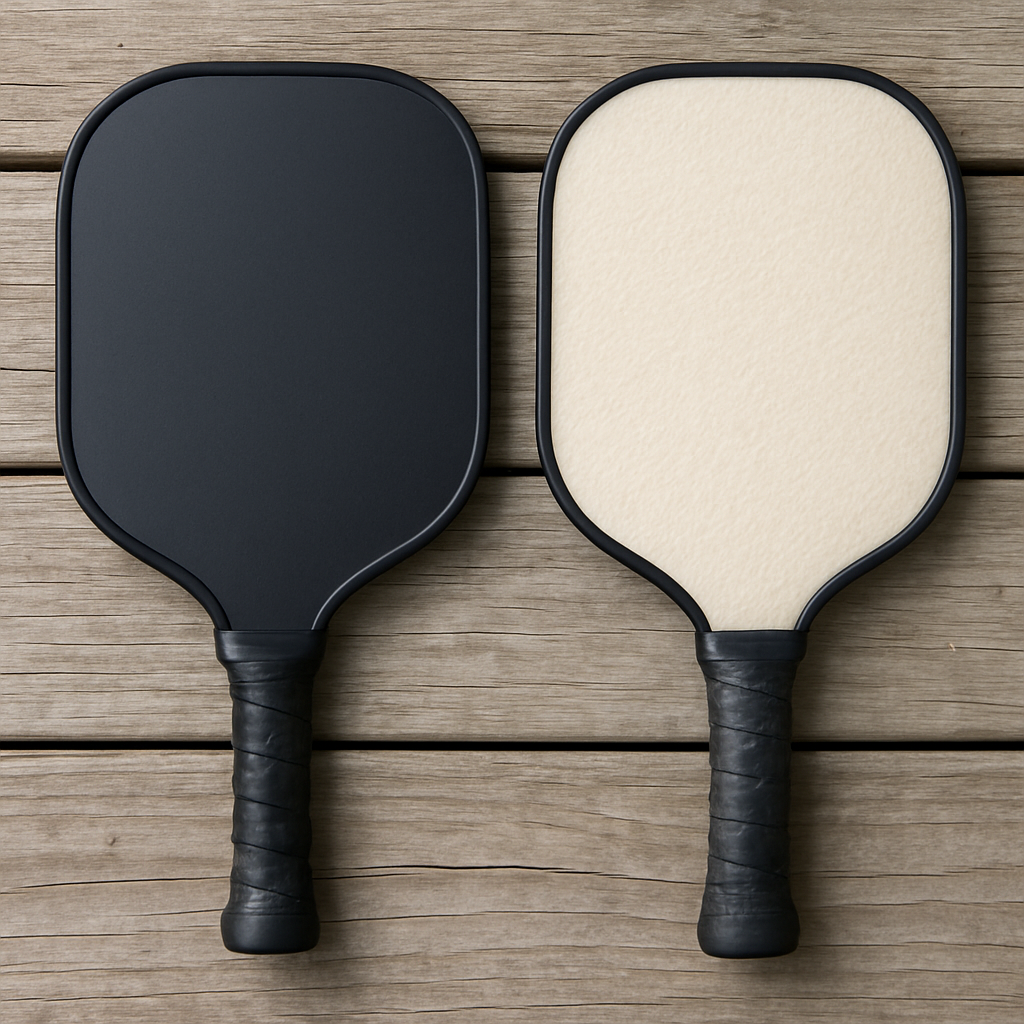
When new court rules don’t fully solve the problem, the next place to look is at the equipment. Equipment upgrades play a major role in effective pickleball noise mitigation because they reduce sound at the source. Not all pickleball paddles are created equal in the sound department, and the sharp “pop” comes directly from the paddle’s internal core. Modern polymer-core paddles use a softer honeycomb structure. That design absorbs more impact sound than older or cheaper models. This simple material difference results in a noticeably quieter, less piercing sound that doesn’t travel as far, offering immediate acoustic relief.
To complement quieter paddles, consider the pickleball itself. In response to noise concerns, manufacturers have developed “low-noise” balls, often made from softer plastic or even foam. These alternatives are specifically engineered to produce a lower-pitched, duller sound upon impact—more of a “thud” than a “pop.” They may feel slightly different during play. However, they significantly reduce the frequency that irritates neighbors the most.
For a community-wide solution, an HOA can establish an “approved equipment” list, requiring that only certified quiet paddles and balls be used on the courts. This strategy creates a consistent, lower-decibel environment and ensures that the investment in community harmony isn’t undone by a single loud paddle. But for courts located very close to homes, even quieter gear might not be enough. In those cases, it’s time to consider a more permanent, structural solution.
Tier 3: Structural Pickleball Noise Mitigation with Acoustic Barriers
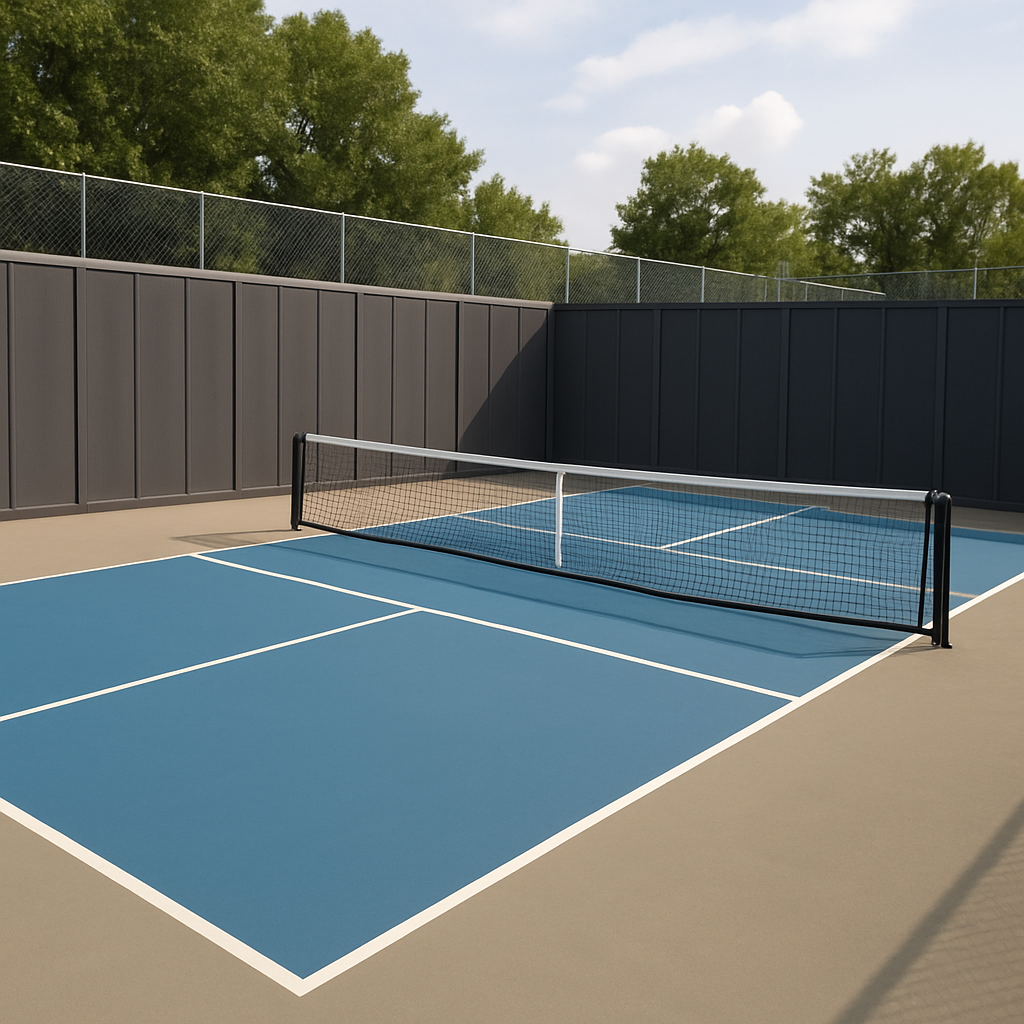
When operational rules and quieter equipment still aren’t enough, it’s time to look at structural solutions that block noise at its source. A common mistake is to assume a tall privacy fence will solve the problem. While it blocks the view, a standard wood or vinyl fence is full of gaps and made of thin material that sound waves can easily pass through. An effective acoustic fence for pickleball courts is fundamentally different; it’s a dense, solid, and seamless barrier designed to stop sound. These systems often use heavy materials like Mass-Loaded Vinyl. This flexible, rubber-like sheet blocks sound effectively. It provides a reliable method for soundproofing outdoor pickleball courts.
While considering these options, many wonder about the difference between acoustic barriers vs. natural sound buffers like trees and shrubs. Landscaping absolutely improves aesthetics and can help scatter sound waves, but it does very little to block the sharp, high-frequency pop of pickleball. Think of it this way: a dense hedge might muffle a conversation, but a sudden, sharp clap will travel right through it. For pickleball’s unique sound profile, a natural barrier is rarely a sufficient standalone solution.
Before your community commits to a five-figure investment in fencing, a professional sound study is a crucial first step. Acoustical consultants use specialized equipment to measure decibel levels at nearby properties. They also model how different pickleball court sound mitigation techniques will perform. This report provides objective data. It removes emotion from the debate. It also justifies the cost and confirms the chosen solution will work. With this expert guidance, your community can make a confident, effective decision.
Your Playbook for a Peaceful Pickleball Resolution
Where once there was the pop of the ball versus the frustration of neighbors, you now have a clear roadmap to guide your community from deadlock to decision-making. This playbook provides a proven process for handling noise complaints through structured pickleball noise mitigation strategies, ensuring every voice is heard and that fairness, not frustration, leads the way.
Start by suggesting the very first step: forming a balanced committee of players and residents to review the solutions. This single action can transform the entire dynamic and rebuild neighborhood trust. When you champion a fair process, you empower your community. Players and residents can then balance their love of the game with the need for peace.

Leave a Reply