

Pickleball Noise Ordinances: What Cities & HOAs Typically Regulate (and How to Comply)
Pop. Pop. POP. For some, it’s the sound of community and fun. For others, it’s a non-stop headache, leading to formal pickleball noise complaints in many neighborhoods. As pickleball noise ordinances become more common across cities and HOA communities, many residents are asking what the rules actually regulate and how to comply.
Loudness alone isn’t the issue. Sound measurements show the typical pickleball decibel level reaches about 70 dB at 100 feet. That’s louder than a conversation (~60 dB) but quieter than a gas lawnmower (~85 dB). What truly makes it disruptive is the sound’s character: a sharp, high-frequency pop created by a hard plastic ball striking a solid composite paddle. If you want a deeper breakdown of how pickleball sound levels travel and why the sharp pop carries so far, see our complete guide.
Unlike the muffled ‘thwack’ from a felt tennis ball, this impulsive sound cuts through background noise. As a result, the pickleball vs. tennis court noise debate focuses more on frequency than volume, which is crucial for measuring noise levels fairly and decoding the rules designed to keep the peace.

Who Enforces Pickleball Noise Ordinances? City vs. HOA Rules Explained
When pickleball noise becomes an issue, the first question is often: who is in charge? Understanding local pickleball noise ordinances is the first step toward resolving conflict legally and fairly.
Two main authorities typically regulate noise. The first is a city or county ordinance, which is a public law that applies to everyone in a specific jurisdiction—think of it as a “speed limit” for sound that the entire town must follow. These general regulations are the baseline for what’s considered a public nuisance.
Your neighborhood may also have its own set of HOA covenants or rules. They apply only to residents within that specific community. An HOA may enforce stricter limits than the city. For example, it might end play at 8 p.m. even if the city allows noise until 10 p.m. However, it cannot override city law by allowing more noise than the ordinance permits. To find your local regulations, start by searching your city’s website for the municipal code pickleball noise or contacting your HOA board for its specific policies.
What Pickleball Noise Ordinances Actually Regulate: The 4 Common Approaches
While every community is different, most pickleball noise ordinances fall into four common-sense categories. Instead of an outright ban, these rules aim to balance fun with peace by controlling the when, where, and how of the game. You’ll most often see a combination of the following approaches:
-
- Time of Day Restrictions: The most frequent rule, setting specific pickleball quiet hours (e.g., no play before 8 a.m. or after sunset) to protect neighbors during sensitive times.
-
- Location & Setbacks: Requiring new courts to be built a minimum distance—like 300 to 500 feet—from the nearest homes, giving the sound space to fade naturally.
-
- Equipment Rules: Mandating the use of specific gear, such as quiet pickleball paddles vs standard ones, or using softer balls that are designed to reduce the sharp “pop.”
-
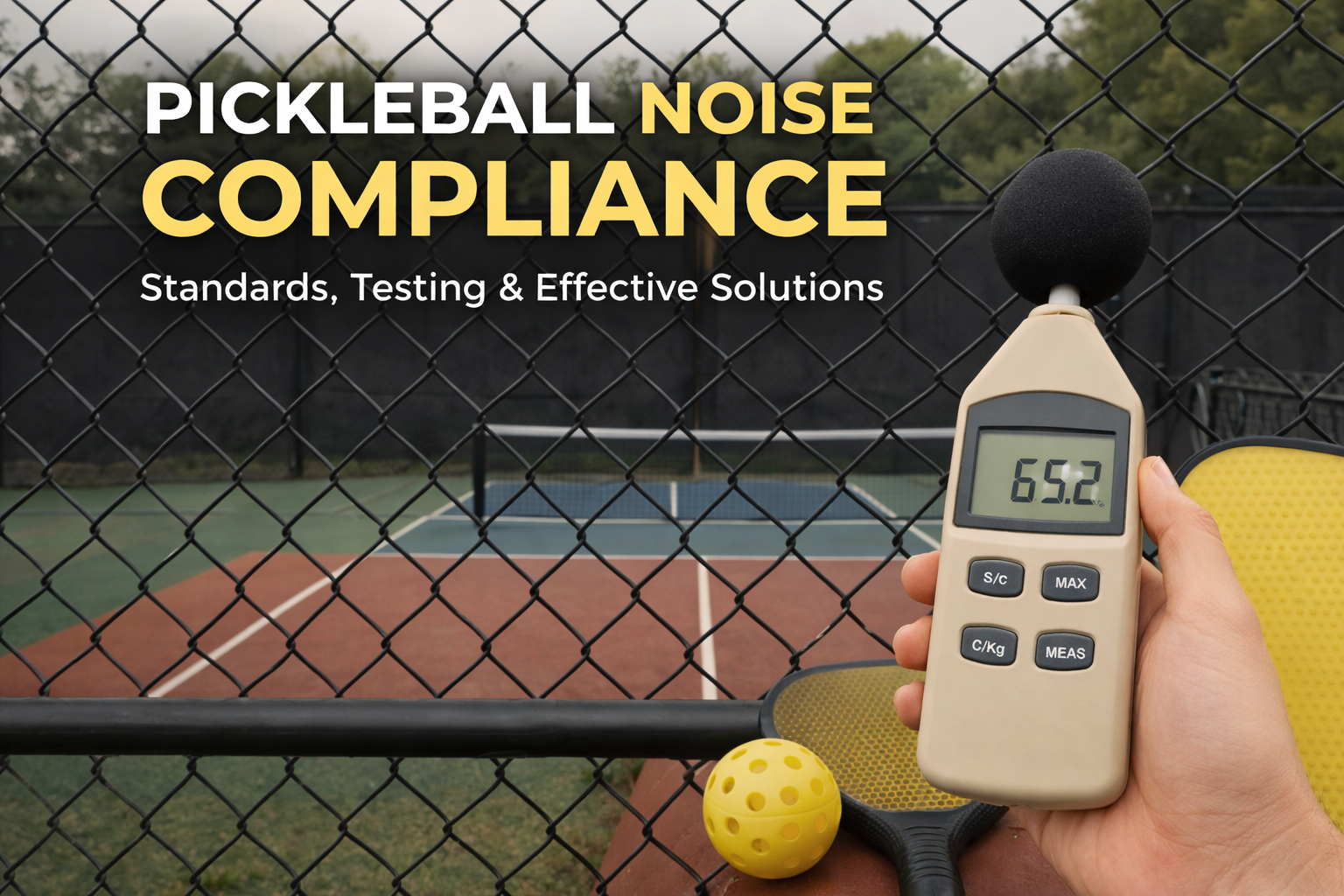
- Performance Limits: Setting a maximum “volume,” often measured in decibels, that can’t be exceeded at the nearest residential property line. Learn how to properly measure pickleball noise before filing a complaint.
Knowing which of these regulations apply locally is the key to playing considerately and avoiding conflict.
How to Comply and Be a Good Neighbor: A Player’s Guide
Following pickleball noise ordinances starts with simple choices. The easiest step is adjusting when you play. Since many complaints arise during early mornings or evenings, mid-day games create fewer disruptions.
Equipment also makes a difference. For example, quiet pickleball paddles significantly reduce the sharp pop. In addition, USA Pickleball certifies products in its “Quiet Category.” While no ball is completely silent, pairing a certified paddle with a softer ball lowers noise levels even further.
Clear communication prevents many disputes. A friendly conversation with nearby residents can ease tension before it escalates. In situations where issues continue, communities may consider more permanent solutions.
Beyond Bans: Real-World Solutions for Quieter Courts
When quiet paddles and scheduling aren’t enough, physical upgrades help control noise. Many communities now install permanent pickleball noise reduction systems.
Acoustic fencing remains one of the most effective options. Unlike chain-link fencing, these solid panels block and absorb sound waves. This is why understanding the difference between a windscreen and a true pickleball sound barrier matters.
As a result, they reduce the sharp pop that reaches neighboring homes. Courts near property lines benefit the most from this approach.
Landscaping adds another helpful layer. Dense rows of evergreen trees or shrubs absorb and scatter sound. Although plants rarely solve the issue alone, combining them with acoustic fencing improves results. Layered solutions often produce the best long-term outcomes.

Finding Common Ground: Your Action Plan for Pickleball Peace
By understanding how pickleball noise ordinances work, you can approach conflicts with confidence instead of frustration. Armed with a clear understanding of the rules and the reasons behind them, you are equipped to help turn neighborhood friction into a fair solution. It’s about moving past complaints and toward collaboration. Whether you’re a player, resident, or board member, here is your plan for what to do next:
-
- INVESTIGATE: Find your specific city/HOA rules for play.
- COMMUNICATE: Talk to players or neighbors before escalating issues.
- COLLABORATE: Propose pickleball noise reduction solutions like quiet hours or sound-dampening equipment.
By starting with a conversation, you shift the goal from winning a fight to finding a win-win compromise for your community.


Leave a Reply