

Measure Pickleball Noise Correctly: dB Meter Setup, Distances & Test Locations
That constant pop, pop, pop from the nearby pickleball court can be frustrating. If you want to measure pickleball noise accurately and present credible data that your HOA, city council, or neighbors can’t ignore, this guide will show you exactly how to do it. A noise complaint based on how loud it feels is easy to dismiss; a credible, defensible number forces officials to address the issue.
Why a Phone App Fails: Choosing the Right Tool for the Job
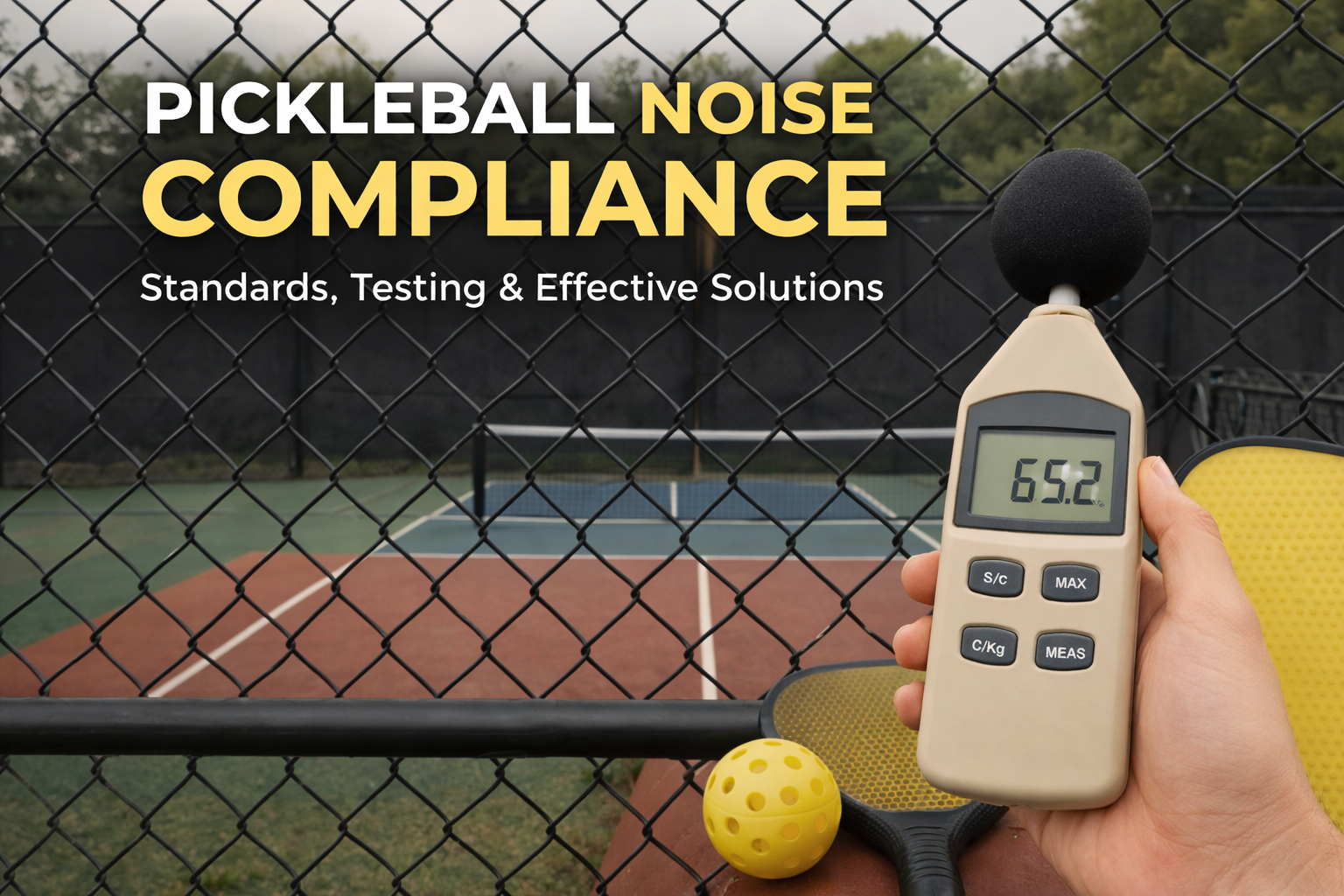
While it’s tempting to use a decibel app on your smartphone, its readings are easily dismissed. A phone’s microphone is designed for the human voice, not for precise environmental sound tests, so its measurements are often inaccurate and won’t stand up to scrutiny. For data that holds up, you need a dedicated Sound Level Meter (SLM). These handheld devices are built to accurately measure pickleball noise pressure, and even a basic model provides the credibility a phone app lacks.
The most crucial setting on an SLM is A-weighting (dBA). Unlike a phone that hears all frequencies equally, A-weighting makes the meter “listen” more like a human ear. It’s more sensitive to the high-frequency pop of a pickleball and less sensitive to low rumbles we tend to ignore. Using dBA ensures you capture the noise as you actually experience it. This is especially important when documenting persistent pickleball noise complaints, where the sharp peak sounds drive frustration.

What the Decibel Numbers Mean in the Real World
It’s helpful to understand what your dBA readings signify. The decibel scale is logarithmic, meaning a small jump represents a large increase in sound energy. A 10-decibel increase (e.g., from 60 to 70 dBA) sounds twice as loud to our ears. This is why a seemingly minor difference in measurements can feel so significant.
For context, a normal conversation is about 60 dBA, while a vacuum cleaner is around 75 dBA. If the peak pickleball noise consistently hits 70 dBA at your property line, it’s like having a loud appliance constantly running next door. This context turns an abstract number into a relatable problem that officials can better understand. Once you measure pickleball noise accurately, the next step is exploring proven ways to reduce pickleball noise through equipment, scheduling, and barriers.
Your Pre-Test Checklist: Set Up Your dB Meter for Accurate Measure Of Pickleball Noise
Getting a trustworthy result when you measure pickleball noise isn’t just about the meter; it’s about eliminating doubt. To ensure a steady, repeatable reading, use a simple camera tripod. Hand-holding introduces shakes and inconsistencies that make your data easy to dismiss. A tripod shows you followed a proper, credible procedure.
Next, dial in the right settings. Your meter has a ‘Response’ option, typically ‘Fast’ or ‘Slow’. While ‘Fast’ captures every split-second sound, the reading is too jumpy to record easily. Choose ‘Slow’. This setting averages the noise over one second, providing a more stable and useful number that reflects the overall sound environment.
Your 4-Step Setup:
- Install fresh batteries and power on the meter.
- Mount it on a tripod at 4-5 feet (ear height).
- Select ‘A’ frequency weighting (dBA).
- Select the ‘Slow’ response setting.
Where to Stand When You Measure Pickleball Noise
The most powerful measurement location is the one that matters to you: your backyard, your deck, or the property line closest to the courts. This directly answers the question, “How loud is it here?” For added credibility, if you can safely measure from a standard distance like 50 or 100 feet from the nearest court boundary, do so, as this aligns your data with professional testing practices.
Equally critical is when you test. Your meter impartially records the pickleball pop but also wind, passing cars, or a neighbor’s air conditioner. This unwanted background noise can spoil your reading. To isolate the court noise, test on a calm, dry day with as little other activity as possible. A quiet morning is better than a windy afternoon with lawnmowers running.
Remember that distance predictably affects sound. As a rule of thumb, for every doubling of distance from the source, the noise level can drop by approximately 6 dBA. This is why consistency is non-negotiable. Always measure from the exact same spot to create a reliable, apples-to-apples comparison over time.
How to Capture and Document the Noise
You’ll notice two key readings on your meter: Peak and Average. Peak is the sharp, jarring “pop” of the paddle hitting the ball. Average is the sustained sound level over several minutes of play. Capturing both is essential, as the repeated peaks are often the primary source of annoyance, while the average shows the noise’s constant presence.
During a period of active play, let your meter run for at least 5 to 10 minutes. This provides a reliable sample of the noise intrusion, not just a random, one-second fluke. Finally, document your readings in a consistent log. Each time you measure, write down:
- Date and time
- Test location and weather conditions
- Distance from the court
- The highest Peak dBA reading
- The final Average dBA reading
This organized record is your most powerful tool, turning personal experience into objective, compelling evidence.
You Have the Data. Now What?
When you properly measure pickleball noise, you replace opinion with objective proof. This means that by collecting credible data, you transform your position from a frustrated resident into a prepared advocate. You can now have a constructive conversation backed by facts, not just feelings. Take your next confident step with this plan:
- Find Your Local Noise Ordinance: Search your city or county website for residential decibel limits to see if your numbers exceed the legal threshold. For a deeper breakdown of testing procedures and documentation standards, see our Pickleball Noise Measurement & Compliance Guide.
- Present Your Log Clearly: Share your organized data to show a consistent pattern over time, which is more compelling than a single reading.
- Escalate If Necessary: If initial conversations fail, your documented log provides the foundation for a formal noise complaint.
This methodical approach echoes professional acoustic testing standards and turns a subjective frustration into a compelling case that decision-makers can act upon. If officials recommend installing fencing, understand the difference between a windscreen and a true pickleball sound barrier before investing.

Leave a Reply