
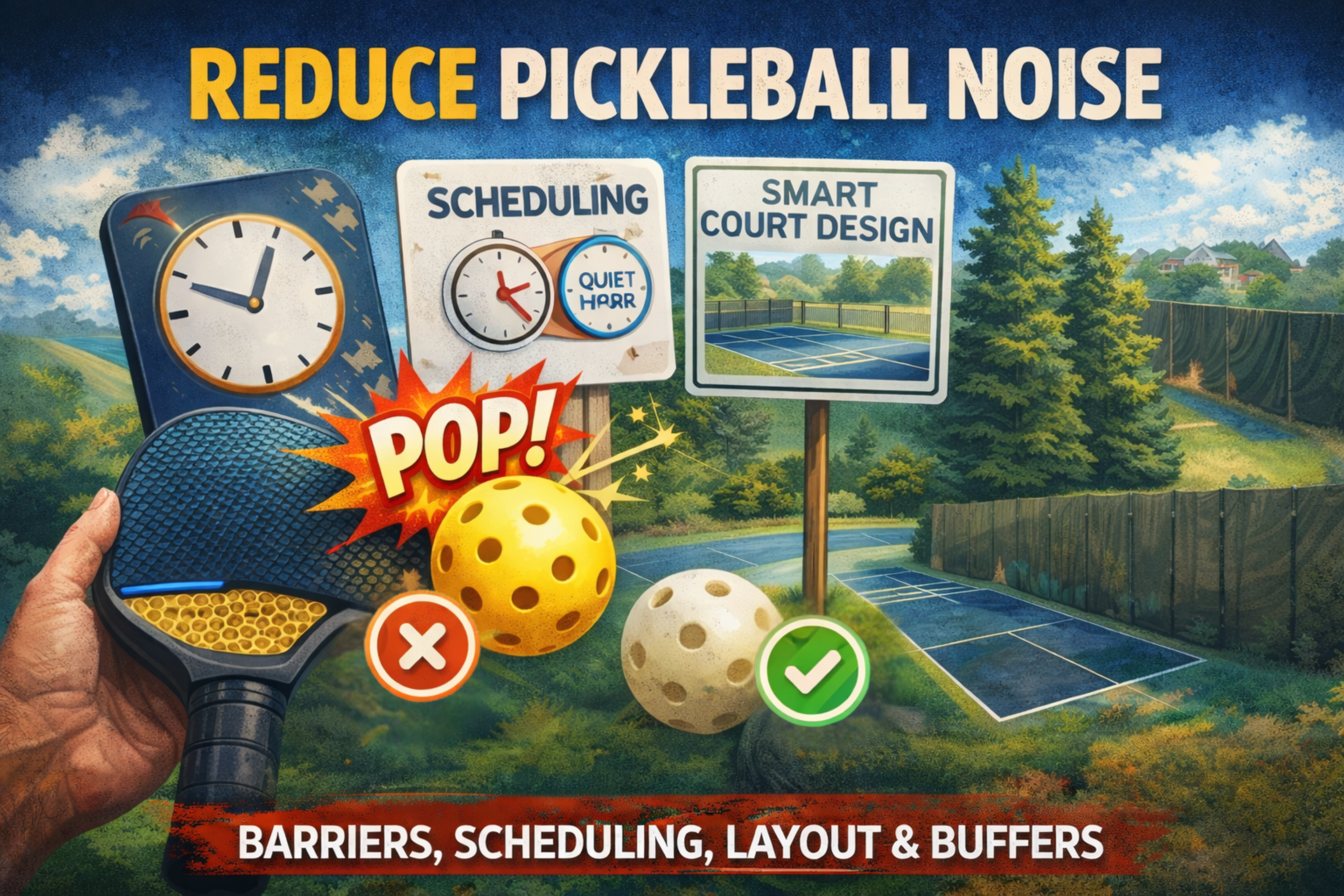
Best Ways to Reduce Pickleball Noise: Barriers, Scheduling, Layout & Buffers
The most effective way to reduce pickleball noise isn’t a 10-foot wall—it’s the equipment in a player’s hand. Many people assume the paddle’s surface creates the loud “pop,” but the core material actually causes most of the noise. A paddle’s core material and thickness are the biggest factors determining what makes a pickleball paddle loud, turning a simple game into a neighborhood issue.
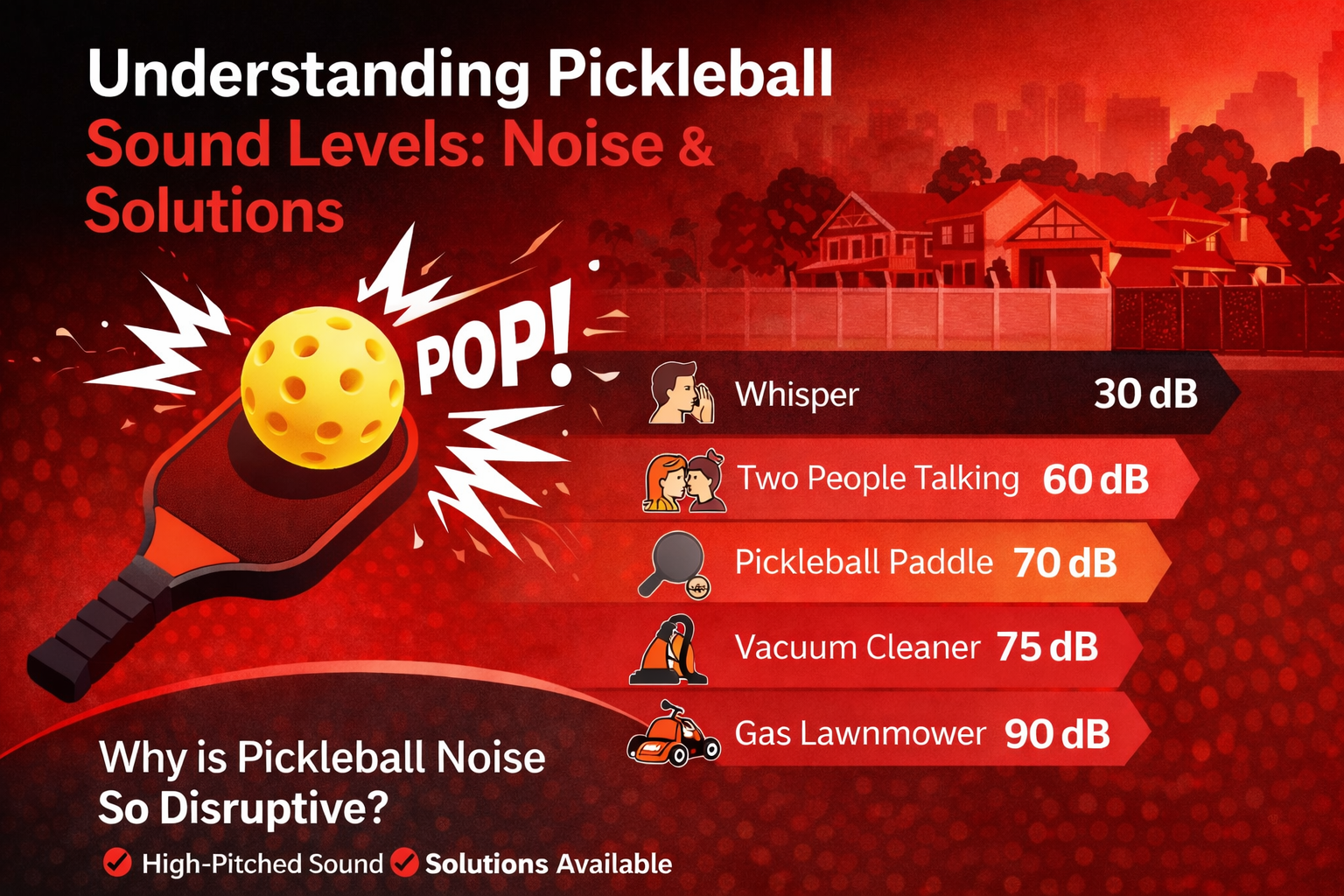
For a deeper explanation of why pickleball sounds so disruptive in the first place, see our Ultimate Guide to Pickleball Noise Abatement.
Think of it this way: thin, rigid paddle cores act like a drum, amplifying impact sound and making it harder to reduce pickleball noise. In contrast, modern quiet pickleball paddles and balls use materials that absorb it. A thick polymer core dampens the noise, and foam pickleballs reduce sound far more than hard plastic balls.
- Noisy: Thin-core paddles & hard plastic balls.
- Quiet: Thick-core (16mm+) polymer paddles & foam or soft plastic balls.
Before considering costly barriers, players can take an immediate, effective step. USA Pickleball, the sport’s governing body, now certifies quieter equipment and lists approved options directly on its website. Checking this “Quiet Category” list is the simplest, fastest way for communities to turn down the volume and find a peaceful solution.

Free and Effective: Using Scheduling to Reduce Pickleball Noise
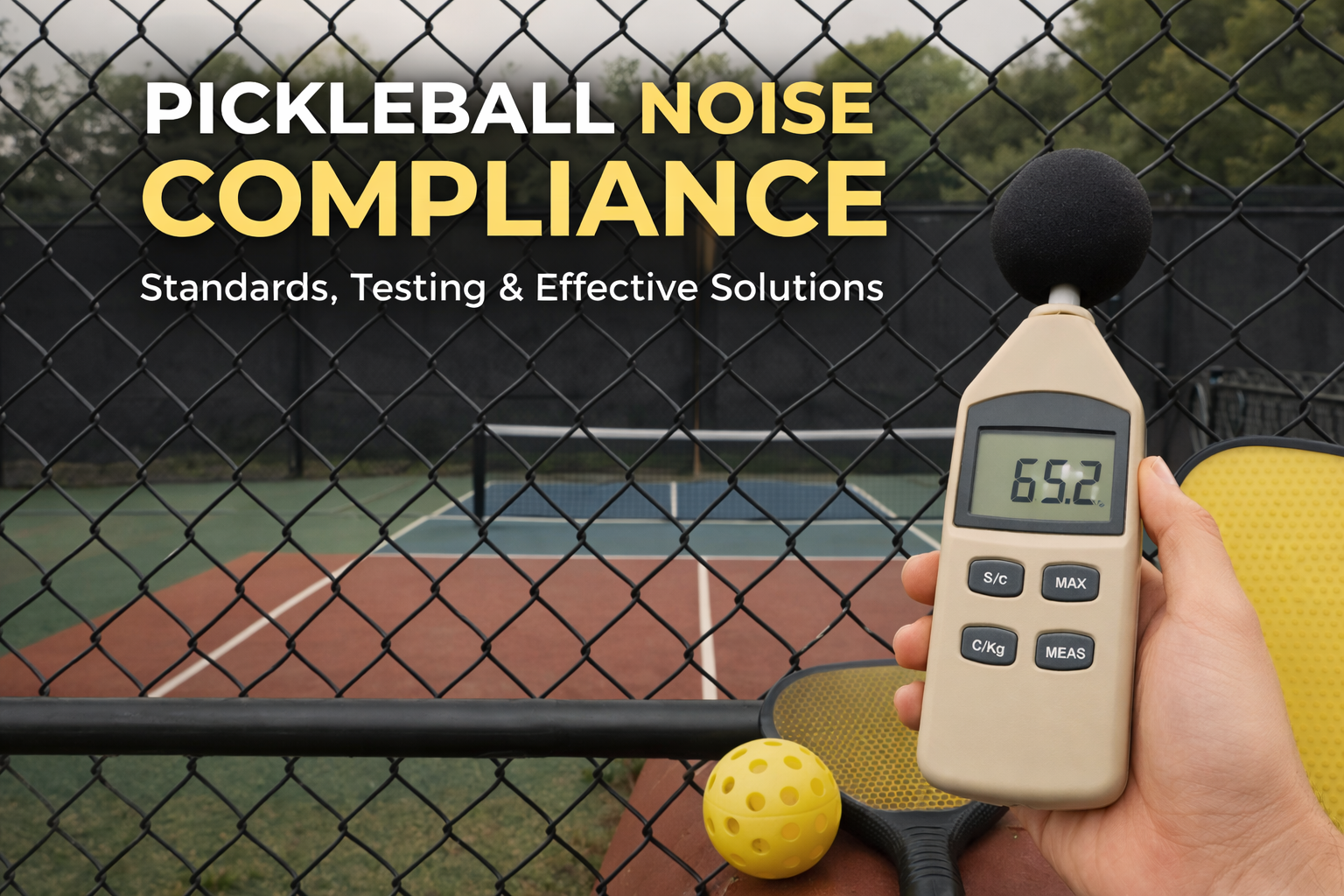
One of the simplest ways to reduce pickleball noise and limit complaints costs nothing: scheduling. By establishing designated hours for play, communities can strike a crucial balance between the sport’s enjoyment and neighborhood peace. This collaborative approach gives communities a powerful first step toward sound abatement and fewer noise complaints. Communities that want to formalize these limits can also review our Pickleball Noise Measurement & Compliance Guide, which explains decibel testing and local rules.
A common-sense schedule that works well for many is allowing play from 9 AM to 7 PM. This simple rule protects quiet mornings and peaceful evenings, concentrating the game’s distinctive pop into the main part of the day when other ambient noise is already higher and residents are less likely to be disturbed.
For this schedule to be effective, clear communication is essential. Posting the agreed-upon hours on a highly visible sign at the court entrance ensures all players are aware of the rules. But scheduling is just one piece of the puzzle; we can also look at smarter spaces and how the court itself is positioned.
Smarter Spaces: How Court Layout and Natural Buffers Can Absorb Sound
Beyond just scheduling, the physical layout of pickleball courts offers a powerful way to manage sound. The simplest tool is distance itself. As a general rule, every time you double the distance from a court, the perceived noise is cut dramatically. This is why placing courts as far as possible from property lines is a critical first step in preventing noise issues before they start.
Even the direction a court faces matters. Most of the sound is generated along the long sidelines where players volley back and forth. A smart pickleball court orientation for noise reduction aims the shorter ends of the court—the baselines—toward homes. This simple design choice directs the loudest sound to travel parallel to residences, rather than straight at them, making a noticeable difference.
Planting can also create a natural sound barrier. While any greenery helps, the most effective solution is a dense vegetative buffer—essentially a thick, living wall of plants that absorbs sound. For this to work, you need dense, year-round foliage. A thick row of evergreen trees like Arborvitae or Leyland Cypress works far better than a thin hedge, acting like a natural sponge for the sharp “pop” of the ball.
Combining distance, smart orientation, and a vegetative buffer can significantly soften the game’s acoustic impact. But in tight spaces where you can’t move a court or wait for trees to grow, you need a more immediate solution. This is where you can begin to look at upgrading the fence itself.
Upgrading Your Fence: The Difference Between Blocking and Absorbing Sound
A standard chain-link fence may keep balls from rolling away, but it does little to stop noise. Sound waves travel like water, passing right through the openings as if the fence weren’t even there. To reduce pickleball noise effectively, you need to introduce materials that either stop sound in its tracks or soak it up.
Understanding the difference between these two approaches is key. Most people think of building a solid wall, but absorbing sound can be just as effective and much more practical. Here’s the simple breakdown:
- Sound Blocking: Stops sound with a solid, heavy mass (like a brick wall).
- Sound Absorption: Traps sound in a soft, porous material (like a heavy blanket).
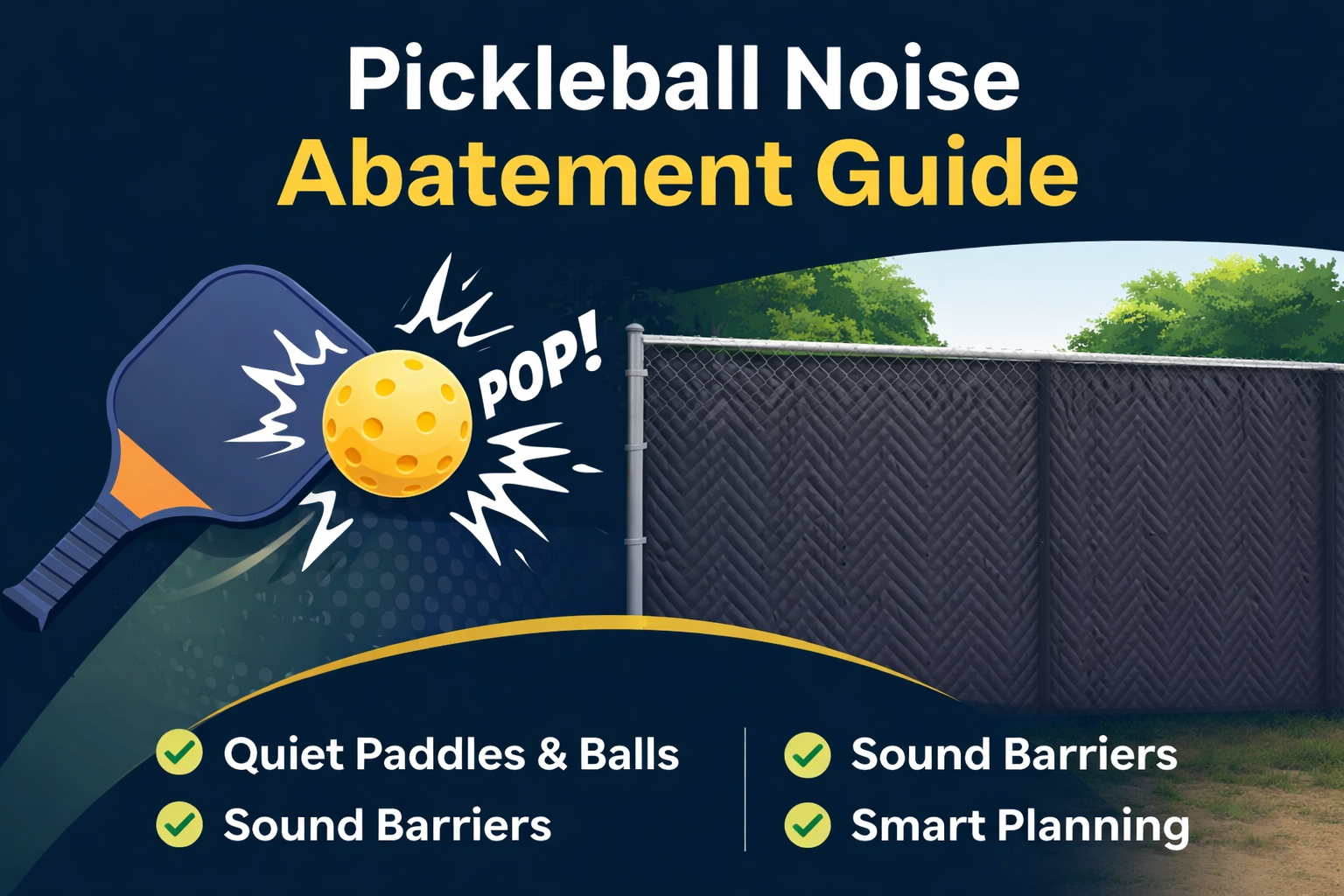
For an immediate and cost-effective upgrade, sound absorbing blankets for pickleball courts are an excellent solution. These quilted, heavy-duty blankets are designed to hang directly on an existing fence. Solutions like outdoor acoustic sound barriers designed for pickleball courts provide immediate, measurable noise reduction. They work by capturing the sharp “pop” instead of letting it pass through, dramatically softening the noise that reaches nearby homes. But what if blankets aren’t enough?

The Ultimate Solution: When to Invest in a Permanent Acoustic Barrier
While sound-absorbing blankets offer significant relief, some situations demand a more powerful approach. For courts located very close to homes or in areas with strict noise rules, the most effective solution is a permanent acoustic barrier. This isn’t just a taller fence; it’s an engineered structure designed specifically to stop sound from escaping the court.
Unlike a regular fence, a true barrier is built from solid, dense materials with no gaps. Remember, sound travels like water and will leak through any opening. Effective pickleball court sound abatement strategies often involve materials like masonry walls, solid-panel wood fences, or specialized acoustic fence panels for sports courts. The key is creating an unbroken, heavy wall that sound waves simply cannot push through or sneak around.
Building a permanent barrier is the most effective but also the most expensive option. This level of investment is typically reserved for new court constructions or for resolving severe noise conflicts, often aligning with recommendations like the USA Pickleball noise guidelines. It represents the top tier of solutions when quiet is an absolute must.
Your Action Plan to Reduce Pickleball Noise
Pickleball noise isn’t an unsolvable issue, and communities can reduce pickleball noise using a range of practical solutions. Whether you’re a player, neighbor, or community leader, you can move beyond the debate and toward effective pickleball noise mitigation.
To reduce pickleball noise, choose the action plan that fits your role and budget:
- Tier 1 (Low Cost/Immediate): Use quiet paddles/balls & create a play schedule.
- Tier 2 (Moderate Investment): Hang acoustic blankets & plant vegetative buffers.
- Tier 3 (High Investment/Permanent): Build a solid acoustic barrier.
Ultimately, the best answers to pickleball noise complaints are rarely a single fix. The most successful outcomes happen when communities layer these solutions. Open communication helps the game grow while preserving neighborhood peace.
Leave a Reply