
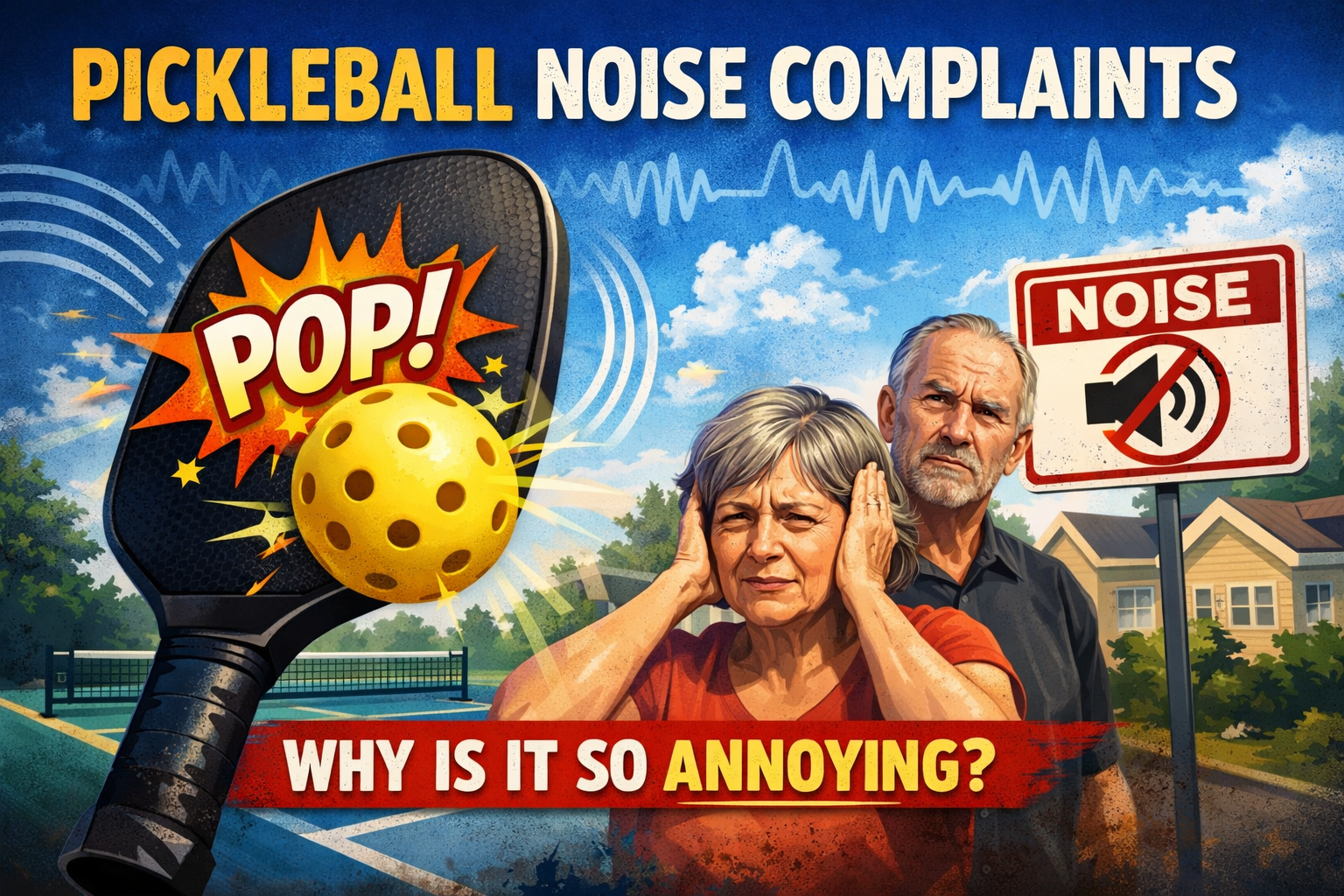
Why Pickleball Noise Triggers Complaints: The “Pop”
Pop. Pop. Pop-pop-pop. POP. Pickleball noise complaints have become common in communities where courts sit close to homes. It’s the soundtrack of a booming sport, but also the source of endless noise complaints. Why does this specific sound drive people to distraction while a nearby tennis match often goes unnoticed?
The science behind pickleball noise complaints isn’t just about volume… Sound experts explain the three key factors that create pickleball noise complaints: the high-pitched Pop, the suddenness of the sound’s Peak, and its relentless, unpredictable Repetition. Our brains are wired to interpret such sharp, repetitive sounds as an alert, explaining why the noise triggers complaints so effectively.
The High-Pitched ‘Pop’: Why Pickleball Noise Complaints Are So Common
Much of the unique sound comes down to the equipment itself. A tennis racket has flexible strings that catch a soft, fuzzy ball, producing a deeper “thwock.” A pickleball paddle, however, is a solid, hard surface smacking a hard plastic ball. The result isn’t a muffled thud but a sharp, high-pitched pop—think more like a wooden spoon hitting a countertop than a soft mallet hitting a drum. This difference in materials creates the sharp sound that drives pickleball noise complaints.
That difference in pitch is measured as frequency in Hertz (Hz). The low thwock of a tennis ball is a low-frequency sound, but the pickleball pop is a high-frequency one. These higher-pitched sounds have a distinct ability to cut through other background noise, like traffic or conversation, making them much harder for our brains to filter out. Neighbors often hear the sound from a block away.
This specific high-frequency range doesn’t just grab attention; it can be genuinely irritating. Human hearing is naturally more sensitive to sounds in this pitch zone, which can make the constant popping feel grating over time, even at a distance.

More Than Loud: How ‘Peak’ Sound Fuels Pickleball Noise Complaints
Beyond its high pitch, the sound’s abrupt character gets under our skin. Imagine two sounds at the same volume: the steady hum of a vacuum cleaner and a single, loud hand clap. The clap is far more jarring because it’s a sudden burst of energy. The pickleball pop is exactly like that clap—it isn’t just loud, it’s abrupt.
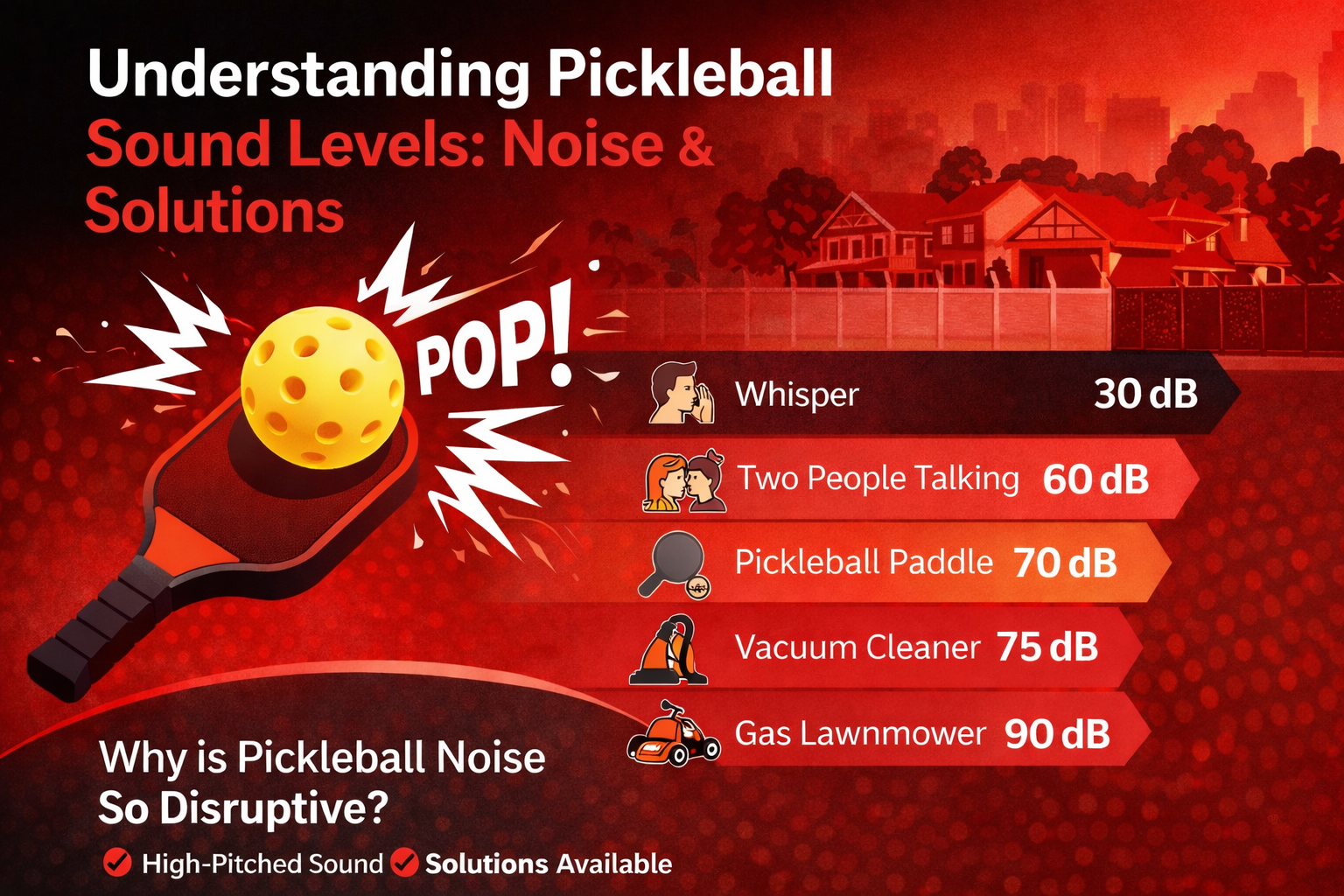
This ‘peak’ sound has a measurable volume. From 100 feet away, a pickleball hit can reach 70 decibels (dB), comparable to a busy street. But unlike the steady drone of traffic, the pop is what experts call an impulsive noise. It spikes from quiet to loud in an instant, which our brains process very differently than a constant sound.
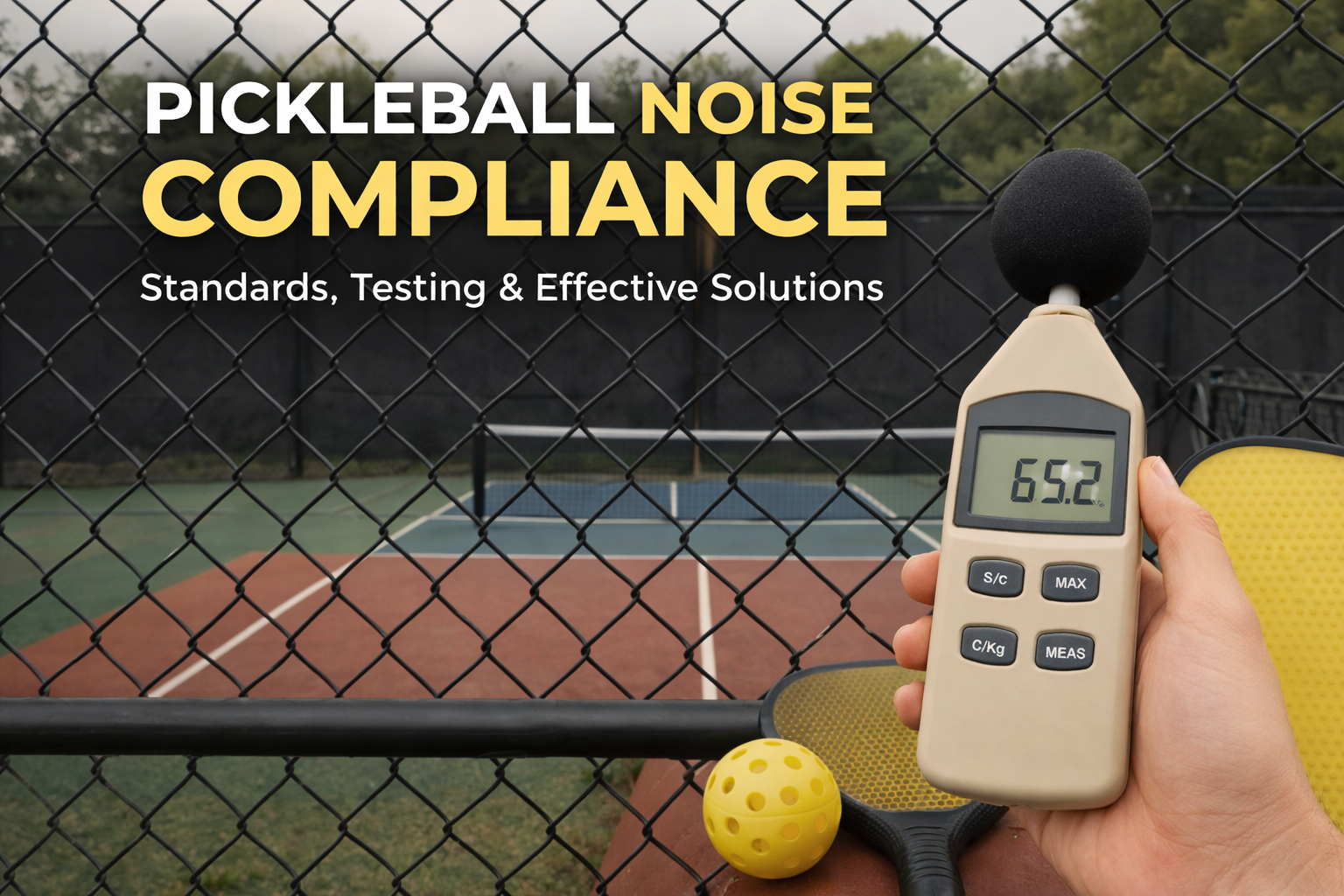
Communities trying to address ongoing pickleball noise complaints can also review our Pickleball Noise Measurement & Compliance Guide, which explains testing, reporting, and local limits.
Our brains are hardwired to interpret sudden, sharp noises as alerts. Even when you consciously know it’s just a game, each pop can trigger a tiny, subconscious jolt of surprise. A single jolt is minor, but the repeated startling effect becomes incredibly wearing.
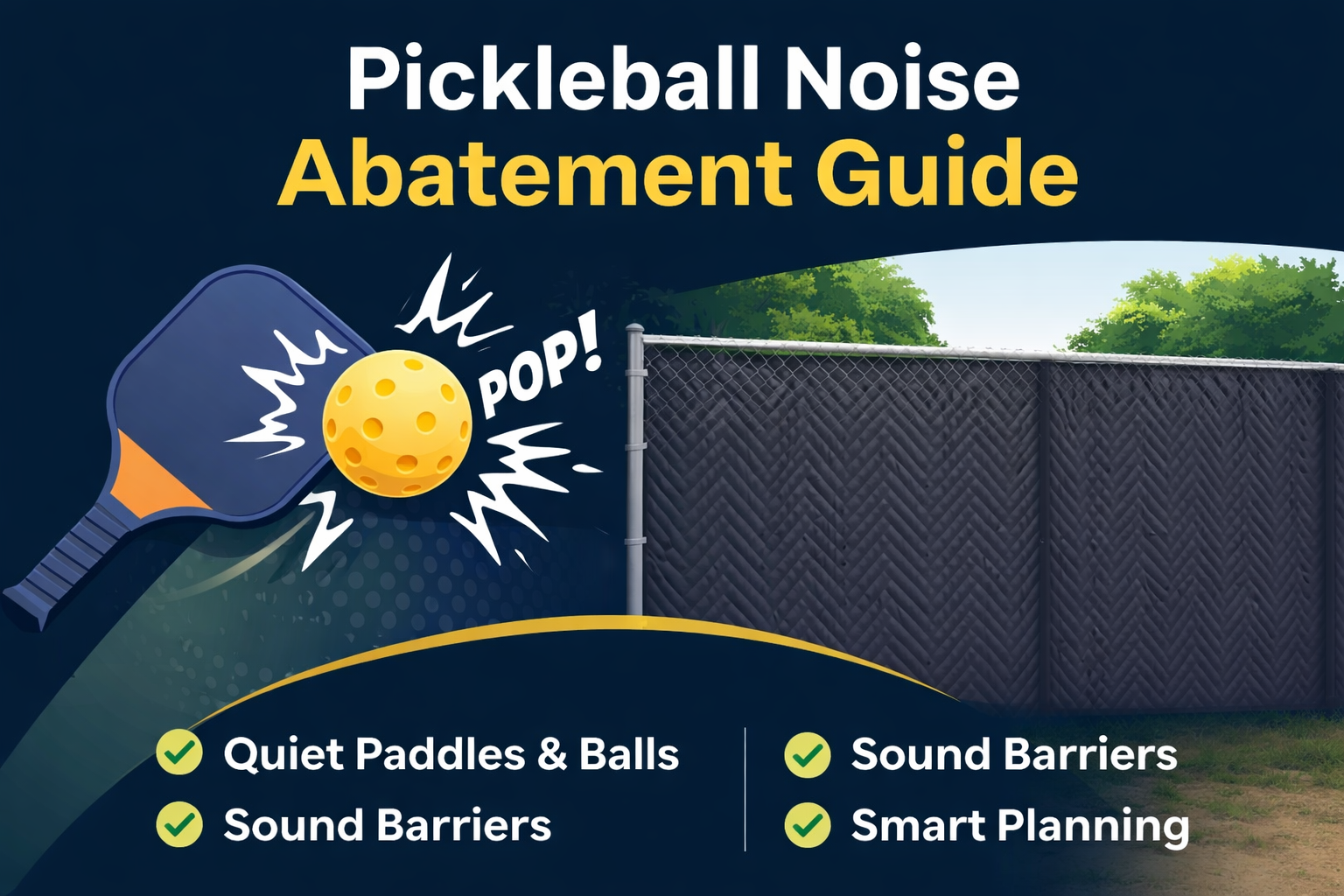
For a deeper look at how communities reduce these issues, we break down practical solutions in our Ultimate Guide to Pickleball Noise Abatement.
The ‘Dripping Faucet’ Effect: How Irregular Repetition Drains Your Focus
Finally, there’s the rhythm—or lack thereof. Think of a dripping faucet in a quiet house. It isn’t the volume of a single drip that feels maddening; it’s the unpredictable pattern. Drip… drip… drip-drip… Your brain can’t ignore it because it can’t predict when the next sound will come. The irregular rhythm of a pickleball game—a rally of pops, a pause, then another quick burst—functions in the exact same way, creating constant auditory suspense.
Our brains are great at filtering out steady, rhythmic noises, like the hum of an air conditioner. But the chaotic pop… pop-pop… POP of a match constantly hijacks our attention. Each sound demands a tiny slice of your focus, preventing your mind from ever truly relaxing or concentrating. This mental fatigue, not just the volume, is why homeowners associations find pickleball rules so contentious.
The inability to ‘just tune it out’ isn’t oversensitivity; it’s a normal human response. Your brain is simply doing its job by paying attention to sudden, irregular noises. When this relentless pattern is combined with the sharp, startling pop, the result is a uniquely potent recipe for annoyance.
Bringing It All Together: Why Pickleball Sound Is a Uniquely Potent Mix
The key difference between pickleball and tennis is this combination of factors. The lower-pitched, softer thwock of a tennis ball is fundamentally less sharp and startling than the hard-surface impact of a pickleball paddle. Together, these elements create a perfect recipe for distracting sound:
- The High-Pitched ‘Pop’ that cuts through background noise.
- The Sudden ‘Peak’ that constantly startles your brain.
- The Irregular Repetition that prevents you from ever tuning it out.
This potent combination elevates the game’s sound from a simple background noise to a genuine neighborhood disturbance for many. It’s not just loud; it’s acoustically engineered to demand attention. The good news is that the sport’s explosive growth is driving the search for a solution.
Can Pickleball Get Quieter? A Quick Look at Emerging Solutions
Thankfully, the search for a quieter game is already underway. Manufacturers are developing low-noise equipment, including quiet pickleball paddles and balls that use sound-dampening cores. This new generation of gear aims for a softer, lower-frequency sound that is far less disruptive.
Beyond changing gear, communities are also learning how to soundproof a pickleball court. The most effective method involves installing specialized acoustic fences. Solutions like outdoor acoustic sound barriers designed for pickleball courts can significantly reduce how far the popping sound travels. Unlike a standard chain-link fence, these solid barriers are engineered to block and absorb sound waves, dramatically reducing the volume that reaches nearby homes.
Ultimately, the most effective approach combines technology with thoughtful planning. By choosing quieter equipment, installing acoustic barriers, and strategically placing new courts away from residential backyards, communities can find a better balance. This blend of smarter equipment and conscious design is key to ensuring the sport can grow peacefully alongside the neighborhoods that host it.
The Full Picture: Why Understanding the Noise Recipe Matters
Understanding the root cause of pickleball noise complaints helps communities move toward real solutions. The distinctive pop-pop-pop of pickleball isn’t just loud; it’s a specific recipe of sound that our brains find uniquely intrusive. The combination of a high-pitched pop, a sudden peak, and an unpredictable repetition constantly puts our subconscious on alert. Recognizing the biological basis for this irritation is a powerful step. It shifts the conversation from simple complaints about volume to a more productive discussion. About why the sound is so grating, paving the way for effective solutions—from quieter equipment to better court design—that benefit players and communities alike.
Leave a Reply