
Pickleball Sound Barrier 101: How Loud Is It & Why Its Sound Travels
Imagine a perfect summer afternoon. The birds are chirping, a gentle breeze is blowing… and then you hear it. POP… POP… POP-POP-POP. It’s the sound of pickleball, and in neighborhoods across the country, pickleball sound levels are becoming the soundtrack to a growing controversy.
Objective pickleball sound levels are part of the story. However, acoustic research reveals that the volume isn’t the only factor. The real issue is the specific character of the sound hitting your ear. To understand the complaints, it’s crucial to look beyond the decibels and examine why the sharp, high-pitched nature of the sound is the true source of the issue.
How Loud is Pickleball? Comparing Pickleball Sound Levels
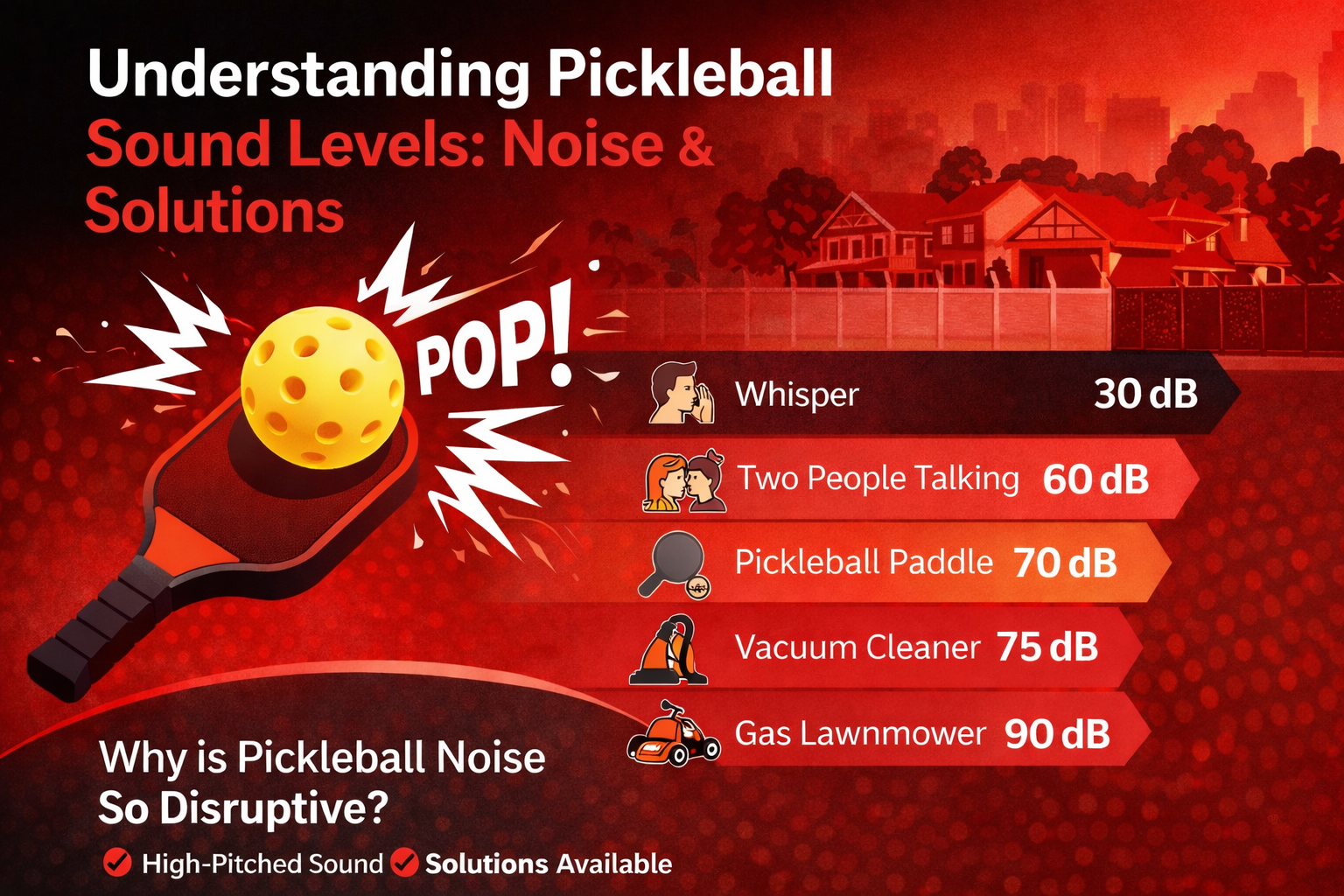
Studies measuring pickleball sound levels show that from 100 feet away, the signature pop of the ball hitting the paddle clocks in at around 70 decibels (dB). To put that number in perspective, here is how pickleball sound levels compare to other common noises:
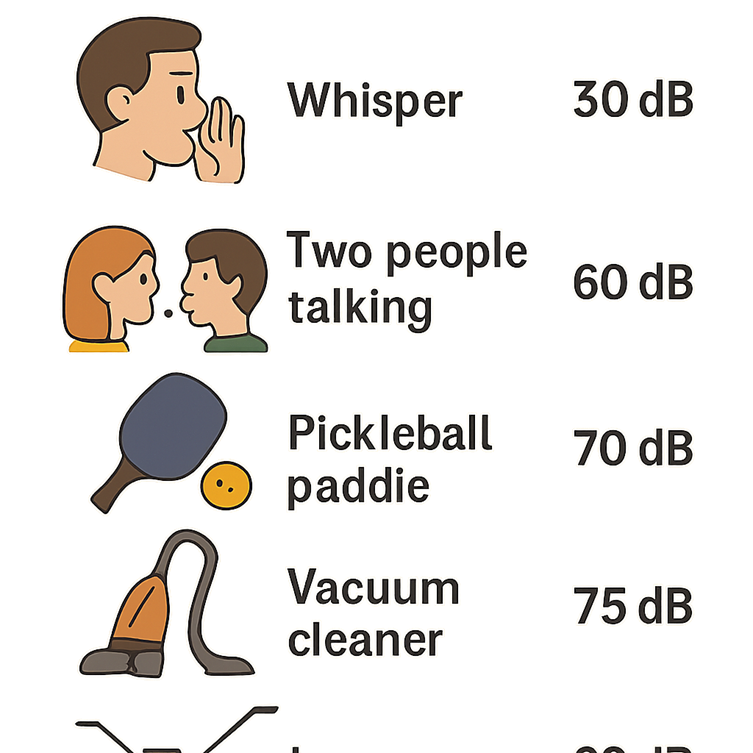
- A Quiet Library: 30 dB
- Normal Conversation: 60 dB
- Pickleball (from 100 ft): 70 dB
- A Vacuum Cleaner: 75 dB
- Gas Lawnmower: 90 dB
Looking at those numbers, pickleball is louder than a conversation but quieter than some common household chores. If sheer volume were the only problem, we’d see widespread noise complaints about vacuum cleaners. The controversy isn’t just about loudness; it’s about the specific character of the sound.
Why a ‘Pop’ Is More Annoying Than a ‘Thwump’: The Science of Sound Character
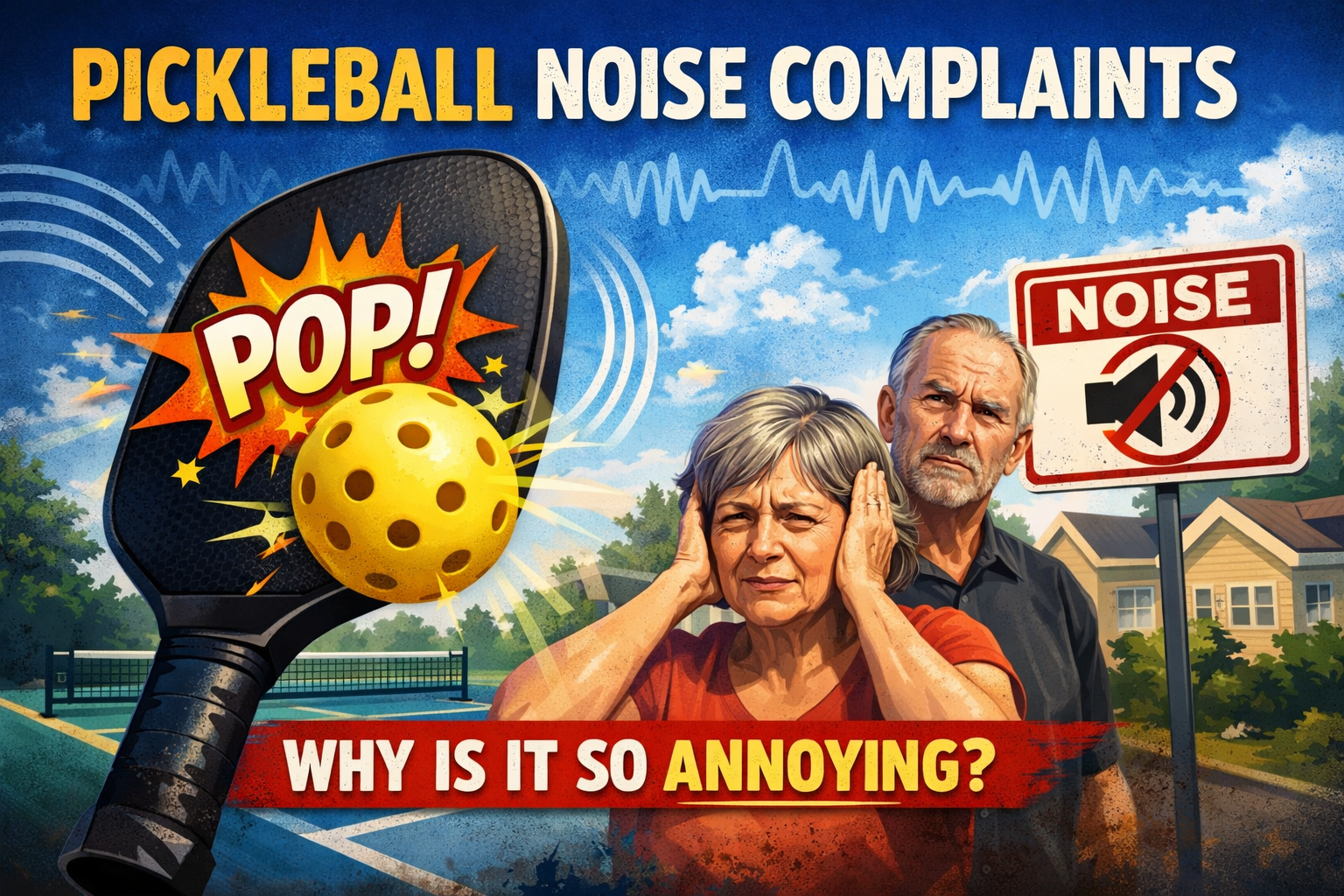
The difference between pickleball and other sports noises lies in the sound’s character, primarily its pitch (or frequency). While the sound of a tennis ball is a lower-pitched ‘thwump,’ pickleball delivers a sharp, high-pitched ‘pop.’ Our ears are naturally more sensitive to these higher frequencies, which can feel more grating than a lower sound at the same volume.
Beyond pitch, the sound’s suddenness is a crucial factor. The noise isn’t a steady drone like an air conditioner that the brain can filter out. Instead, each strike is a sharp, distinct event known as impulse noise. This type of abrupt sound constantly demands the brain’s attention because it signals a sudden change in the environment, much like a single, startling clap of thunder during a steady rain.
This high-pitched, sudden impact is a direct result of the sport’s equipment. The solid core and face of a pickleball paddle striking a hard, perforated plastic ball creates a much different acoustic profile than the soft strings and fuzzy ball used in tennis.
Why Pickleball Sound Levels Travel So Far
That high-pitched, sudden character also explains why the sound of pickleball seems to travel so far. Typical background noise in a neighborhood exists mostly in lower frequencies. This includes traffic, air conditioners, and rustling wind.
The sharp ‘pop’ of pickleball exists on a completely different sonic level, allowing it to slice through this low-pitched ambience instead of getting lost in it. The effect is similar to spotting a single red flower in a green field. The color doesn’t have to be “brighter,” just different enough to stand out.
In the same way, the pickleball sound occupies its own distinct space, which is why the noise can feel so inescapable, traveling into homes and backyards with surprising clarity.
The Guide to Quieter Play: New Paddles and Balls
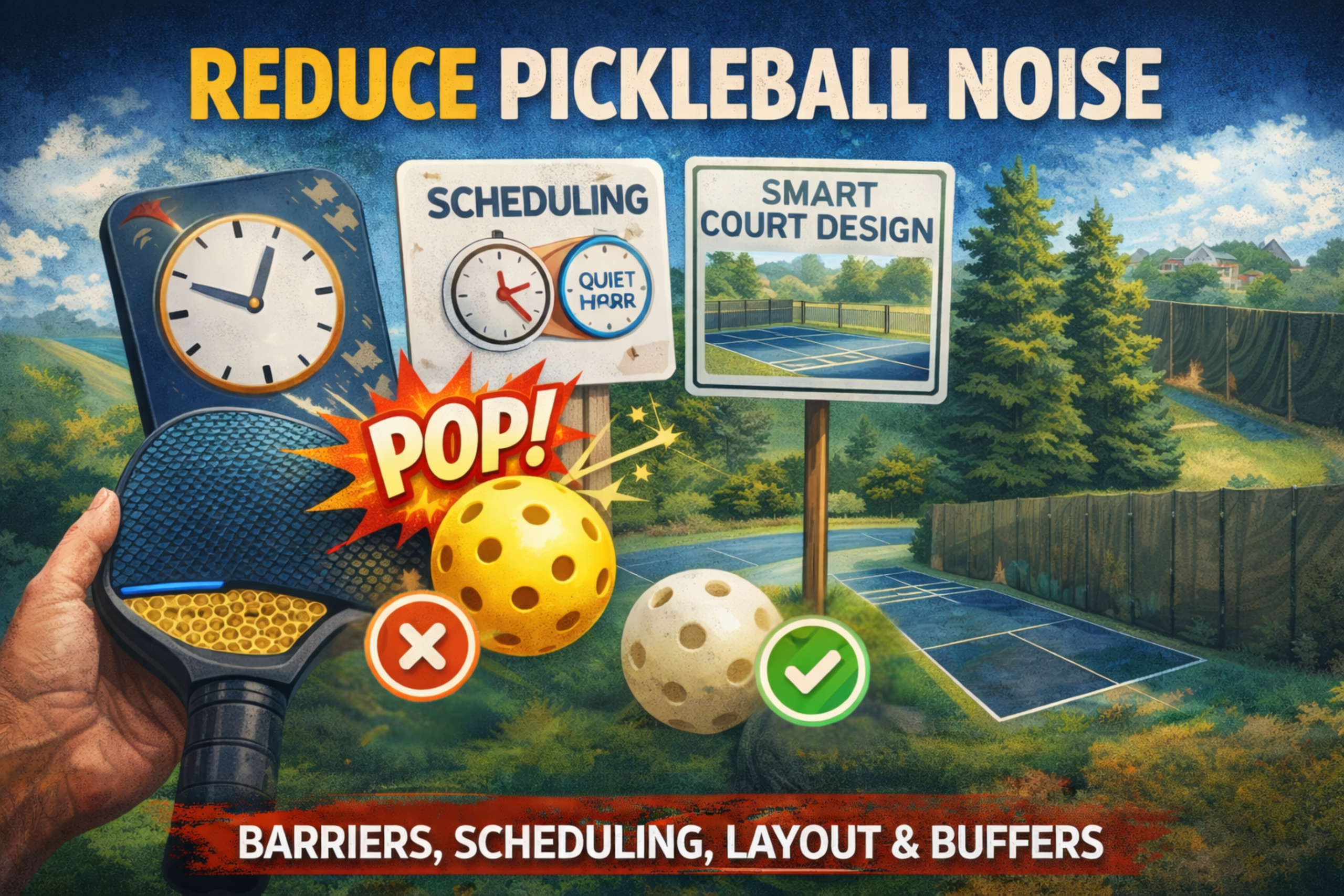
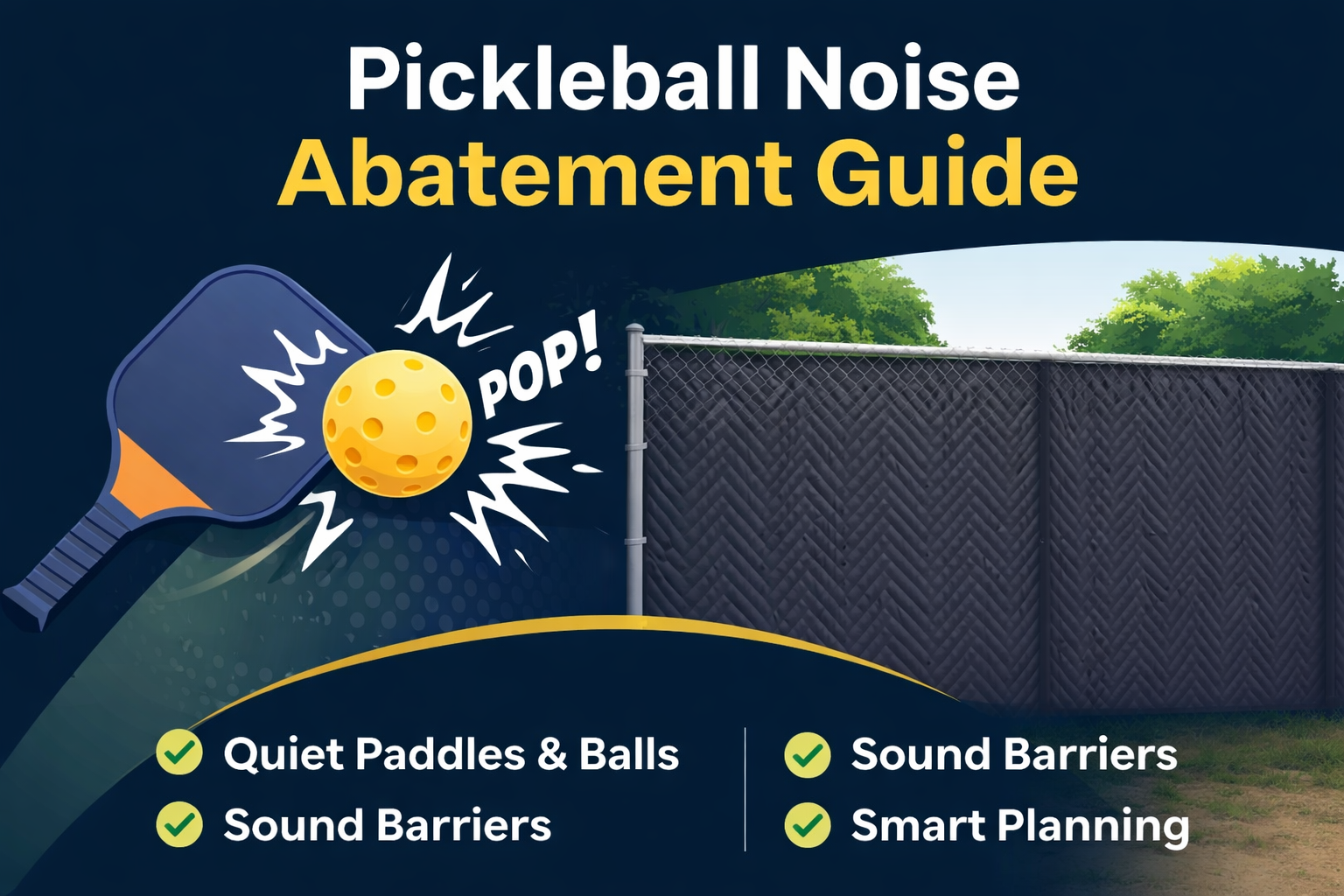
Since the paddle’s impact creates the sharp ‘pop,’ manufacturers are now developing quiet pickleball paddle technology. Instead of accepting noise as part of the game, the industry is re-engineering the paddle core to produce a softer, less intrusive sound.
Quiet paddles use advanced polymer cores engineered to absorb impact and dampen vibration, turning the high-pitched ‘pop’ into a much duller thud. It’s the difference between tapping on a tin can versus a block of dense foam. USA Pickleball, the sport’s governing body, now certifies equipment in a dedicated “Quiet Category,” which includes softer balls designed for noise-sensitive areas.
Beyond Equipment: Can Acoustic Fences Mute a Pickleball Court?
When quieter gear isn’t enough, communities often turn to acoustic fences. Much like the sound walls along a highway, these barriers are specifically engineered to contain the game’s sound and prevent the constant pop from traveling into surrounding homes.
Unlike a standard fence, these barriers are built with special sound-absorbing materials. Solutions like outdoor acoustic sound barriers designed for pickleball courts can significantly reduce how far the sound travels. They work by soaking up the sharp, high-pitched sound waves instead of just deflecting them, offering a powerful method of sound mitigation for residential pickleball areas. While a more significant investment, installing acoustic barriers is one of the most effective solutions available for clubs and neighborhoods.
A Path to Quieter Courts
The controversy over pickleball sound levels isn’t just about volume; it’s about the sound’s unique character. The high-pitched, impulsive pop cuts through background noise and constantly grabs our attention in a way that lower, steadier sounds do not.
Fortunately, understanding the cause points toward clear solutions. The push for quieter play is already emerging through technological advancements in equipment, from vibration-dampening paddle cores to softer balls. For a more comprehensive fix, acoustic barriers can effectively contain the sound at its source. By focusing on these tangible solutions, communities can move beyond conflict often combine education, equipment changes, and proven pickleball noise abatement strategies. They can work toward a more peaceful coexistence between players and their neighbors.
Leave a Reply